
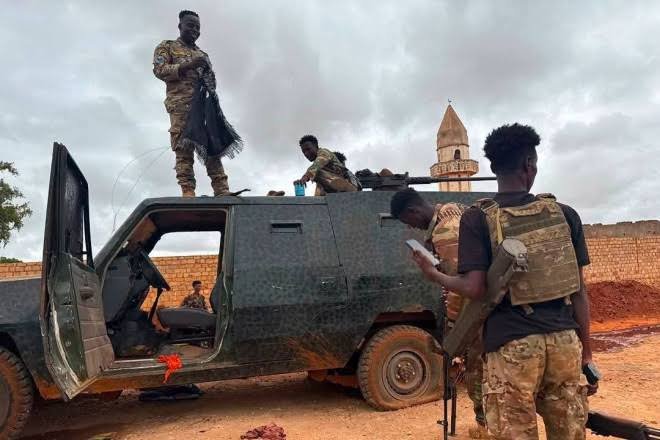
Both organizations reported the fighting, but neither fully investigated the evidence behind allegations that Al-Shabaab and Laftagareen-aligned forces participated in the same operation.
By Osman Omar |
The weakness in the international coverage of the Baidoa attack was not necessarily that every reported fact was wrong. The deeper problem was that the most important security question was left largely unexamined.
Were fighters loyal to former South West State President Abdiaziz Hassan Mohamed Laftagareen acting independently, or was their assault connected to the simultaneous Al-Shabaab attack reported by Somali authorities?
Reuters and Al Jazeera English reported the fighting, casualties, and use of explosive-laden vehicles. However, neither organization conducted a visible, detailed examination of the operational and visual evidence supporting the Somali government’s allegation of coordination. That omission matters because it changes how the entire event is understood.
What happened in Baidoa
The attack began before dawn on August 17, when armed fighters advanced on government positions in Baidoa. At approximately 5:00 AM, a vehicle loaded with explosives targeted a base occupied by the Gorgor battalion of the Somali National Army’s 60th Division.
The Somali Defense Ministry said federal troops repelled the assault and killed approximately 30 attackers. Somalia’s official news agency reported that the attacking force included Al-Shabaab members and militias loyal to Laftagareen.
At the same time, Laftagareen-aligned fighters confronted South West State security personnel, commonly known as the South West Darawiish, elsewhere in Baidoa.
The result was a two-front confrontation: Al-Shabaab was accused of attacking the federal military position while Laftagareen-aligned fighters engaged regional security forces.
Where the Reuters report fell short
Reuters reported that federal troops had driven “opposition forces” loyal to Laftagareen out of Baidoa. Its report cited four residents, included the Defense Ministry’s statement about explosive-laden vehicles, and said Reuters had verified social-media footage.
Reuters therefore conducted real reporting. The weakness was its framing and the limited scope of its investigation.
The article described the event mainly as a confrontation between federal soldiers and political opposition forces. Although it mentioned Somalia’s struggle against Al-Shabaab as background, it did not give comparable attention to the government’s direct allegation that Al-Shabaab fighters participated in the Baidoa operation alongside Laftagareen-aligned forces.
Reuters said it verified videos showing federal soldiers firing from an armored vehicle and civilians carrying wounded people. But its report did not examine the footage reportedly showing different identification bands, bodies attributed to Al-Shabaab fighters, or vehicles allegedly connected to the group.
That is the missing investigation.
The distinction between “opposition fighters attacked federal forces” and “opposition fighters participated in an operation alongside Al-Shabaab” is not a small editorial detail. The first describes a political rebellion. The second raises the possibility of tactical cooperation with a designated terrorist organization.
Reuters reported the battle but did not fully investigate its most consequential allegation.
Where the Al Jazeera report fell short
Al Jazeera English reported that the Defense Ministry had accused Laftagareen’s forces of fighting alongside Al-Shabaab. Unlike Reuters, it included that allegation directly.
However, Al Jazeera treated it as a brief official claim rather than a central question requiring examination.
Its headline described the confrontation as the Somali army clashing with “rebel forces” for control of Baidoa. The report did not analyze the government’s supporting evidence, compare the identification bands visible in circulating footage, or investigate the origin of the vehicles recovered after the battle.
Al Jazeera also reported that the fighting occurred on two fronts, but it did not explore the operational significance of that detail.
Two armed formations attacking two components of the Somali security establishment within the same operational period is precisely the pattern that should have triggered deeper investigation. Were the attacks synchronized? Did they share intelligence or logistical support? Were their targets divided in advance? How did armed men allegedly enter Baidoa without weapons and obtain them inside the city?
The Al Jazeera report repeated the accusation but did not test it.
What the visual evidence deserves
Videos reviewed for this analysis appear to show fighters associated with Laftagareen wearing blue identification bands. Individuals identified as Al-Shabaab fighters appear to be wearing red bands, a color also visible in footage from some of the group’s previous operations.
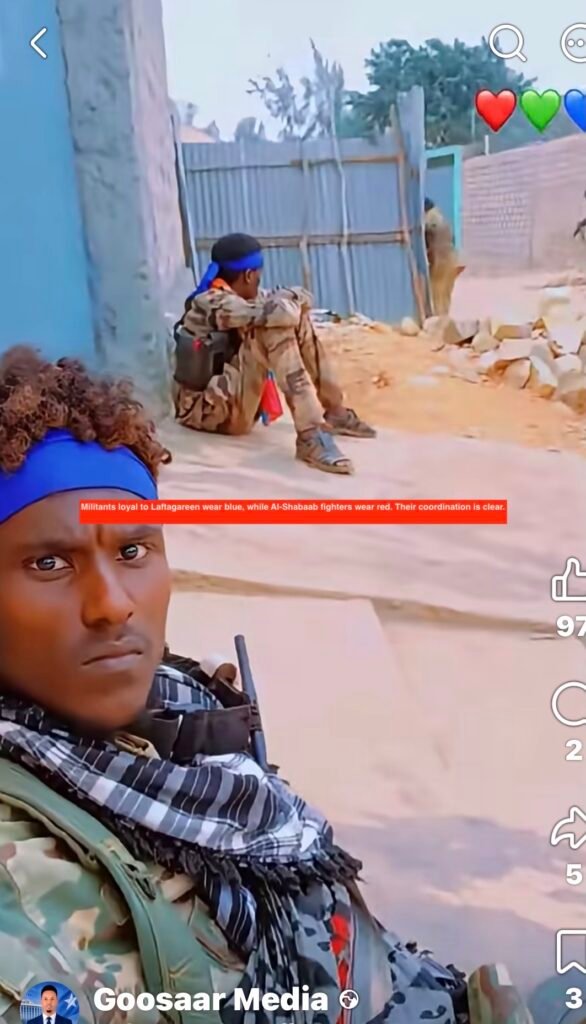
Other footage reportedly shows bodies recovered by South West Darawiish forces bearing red identification bands.
The significance of this material is not merely the colors. The footage appears to distinguish two organized formations operating against separate government targets during the same battle.
The blue-banded fighters were reportedly confronting South West State forces. The red-banded fighters were associated with the attack on the Somali National Army’s Gorgor position. This apparent separation of roles is consistent with the government’s allegation of a coordinated operation.
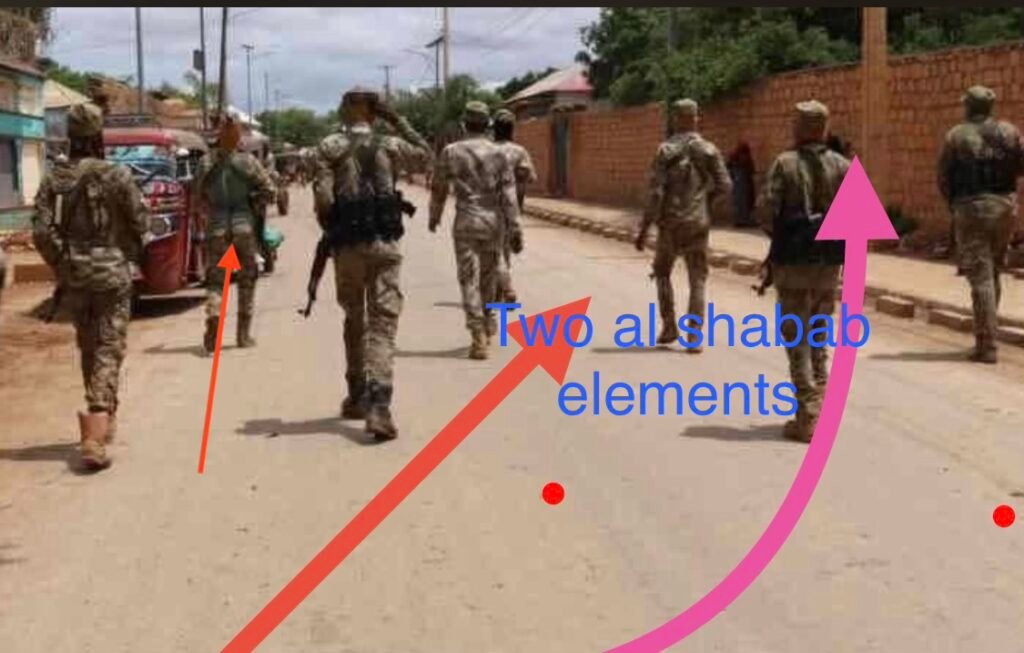
The videos should be authenticated through their original files, timestamps and locations. But their contents were substantial enough to deserve examination by international news organizations covering the battle.
Neither Reuters nor Al Jazeera published such an analysis.
The captured vehicle
The Somali National Army also published footage showing weapons and vehicles reportedly recovered from the attackers.
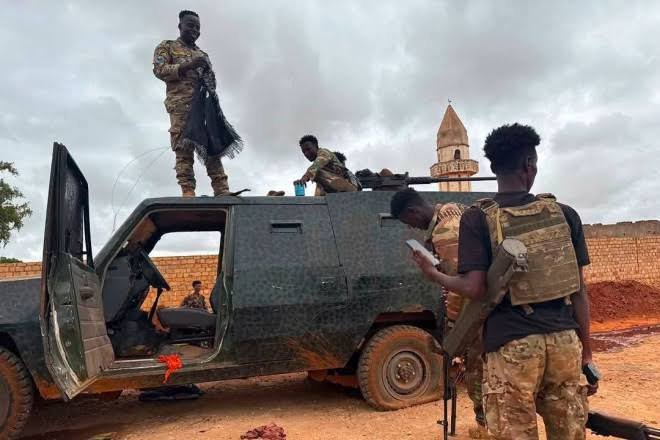
One vehicle appears similar to equipment displayed in older Al-Shabaab media after the organization seized government vehicles in 2023. A proper open-source investigation should compare older and newer images by examining distinctive modifications, damage patterns, paintwork, mounted weapons, registration information, or serial numbers.
If the vehicle can be conclusively identified as one previously held by Al-Shabaab, it would provide a physical link between the organization and the Baidoa attack.

Reuters and Al Jazeera had every reason to examine this evidence or ask the Somali authorities to provide the identifying details. Neither report did so.
The alleged nighttime infiltration
Sources described as being within Somali military intelligence claim that some attackers entered Baidoa during the night without weapons and received their weapons after reaching positions inside the city.
This allegation is operationally important. Moving fighters without weapons would reduce their exposure at checkpoints. Supplying them after entry would require local facilitators, stored equipment, and planning.
This is the kind of detail that could help establish whether the attack was spontaneous or organized through an internal support network. It requires corroboration from multiple sources, including checkpoint records, detained suspects, or recovered communications.
Yet neither international report appears to have pursued this line of inquiry.
A failure of depth, not necessarily fabrication
The available record does not support claiming that Reuters conducted no reporting or that Al Jazeera entirely ignored the government’s position. Reuters interviewed residents and verified some of the footage, while Al Jazeera included the Defense Ministry’s accusation.
The credible criticism is narrower—and stronger.
Both organizations reported the visible battle but failed to investigate the evidence behind its most serious allegation. Reuters largely framed the attackers as political opposition forces. Al Jazeera mentioned the alleged Al-Shabaab connection but did not examine the evidence supporting it.
Neither report reconstructed the two-front timeline, analyzed the identification bands, investigated the alleged infiltration, or compared the recovered vehicle with older Al-Shabaab imagery.
That left international audiences with an incomplete account.
The questions that remain
The Somali authorities should now publish the complete evidence supporting their accusation, including original videos, verified timelines, captured equipment records and any communications recovered from the attackers.
Reuters and Al Jazeera should also revisit their reporting and answer several questions:
- Why did Reuters give limited attention to the government’s allegation of Al-Shabaab participation?
- Why did Al Jazeera mention the allegation without examining the evidence supporting it?
- Were the attacks against the Gorgor battalion and the South West Darawiish operationally synchronized?
- Can the recovered vehicle be matched to equipment previously captured by Al-Shabaab?
- Who supplied weapons to the fighters allegedly brought into Baidoa during the night?
These questions are not political decoration. They go to the heart of what happened.
Conclusion
The central failure of the Reuters and Al Jazeera reports was not that they ignored the Baidoa fighting. It was that they stopped at the surface.
Reuters reported a battle between federal forces and political opposition fighters. Al Jazeera included the government’s allegation that Al-Shabaab was involved but did not investigate it. Neither organization publicly examined the full collection of visual and operational indicators that could confirm or challenge the government’s account.
Good journalism reports what happened. Serious journalism asks how the pieces connect.
