
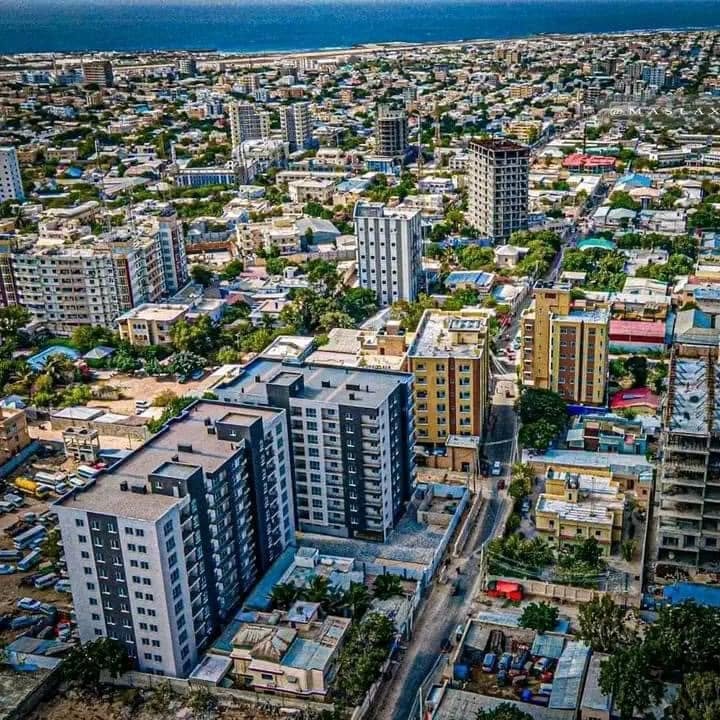
More than three decades after the collapse of Somalia’s central government in 1991, Mogadishu remains a city shaped by conflict, displacement, and decades of unplanned urban expansion. The capital has become both the political heart of Somalia and a symbol of the country’s long struggle to rebuild functioning institutions.
Following the state collapse, hundreds of thousands of displaced families settled wherever land was available. Public and privately owned land alike was developed with little or no urban planning, creating densely populated neighborhoods, blocked roads, weak infrastructure, and limited access for emergency services.
The administration of President Hassan Sheikh Mohamud has placed the redevelopment of Mogadishu among its highest domestic priorities. The government’s program has included reopening public roads, reorganizing neighborhoods, improving sanitation in high-risk areas, and strengthening the operational reach of security institutions. Yet these efforts have also become politically contentious.
The Legacy of State Collapse
The absence of functioning planning institutions after 1991 fundamentally reshaped Mogadishu. Urban expansion occurred largely without zoning regulations, engineering standards, or effective land administration.
Over time, some public roads were obstructed, informal settlements expanded, and critical infrastructure deteriorated. These conditions complicated the delivery of public services and reduced the state’s ability to respond effectively to emergencies.
Urban planning specialists have long argued that poorly planned cities are often harder to secure, particularly in post-conflict environments where state institutions are still recovering. Government officials argue that urban redevelopment is not merely an infrastructure project but also a security strategy.
Improved road access, redesigned neighborhoods, and better municipal planning can enhance police mobility, emergency response, and surveillance while reducing areas that may facilitate organized criminal activity or armed groups.
Comparable approaches have been adopted in several post-conflict cities around the world, where urban redevelopment has been integrated into broader state-building efforts.
Critics, however, argue that redevelopment must proceed with transparency, due process, public consultation, and respect for property rights if it is to earn lasting public legitimacy.
Abandoned Properties and Legal Reform
One of Mogadishu’s continuing challenges is the large number of abandoned or deteriorating buildings whose owners reside abroad or have left them unused for years.
Such properties may create environmental hazards, reduce neighborhood safety, and in some cases become locations for criminal activity.
Because these buildings remain privately owned, any government intervention requires a clear legal framework. Urban governance experts increasingly argue that Somalia would benefit from legislation establishing maintenance obligations, notification procedures, and legal mechanisms allowing authorities to address properties that pose demonstrable risks to public safety while protecting constitutional property rights.
Politics and Urban Transformation
Urban redevelopment has also become part of Somalia’s broader political debate.
Supporters of the government’s approach argue that restoring order after decades of institutional collapse inevitably requires difficult decisions and sustained investment in public infrastructure.
Opponents contend that redevelopment must be accompanied by stronger legal safeguards, transparent implementation, and meaningful engagement with affected communities.
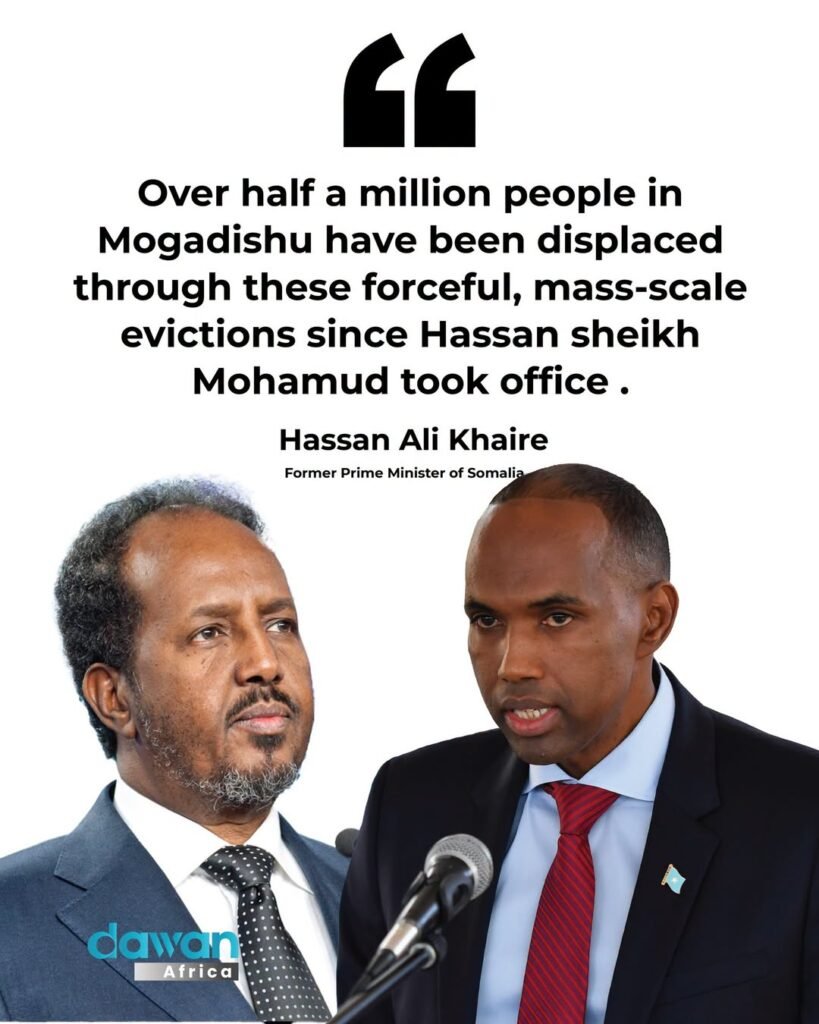
Both perspectives reflect a broader challenge facing many post-conflict societies: how to rebuild cities without undermining public trust.
In the end
Mogadishu’s transformation should not be measured solely by the number of roads reopened or buildings removed. Its long-term success will depend on whether redevelopment strengthens the rule of law, improves public services, protects citizens’ rights, and creates a safer, more functional capital.
Ultimately, the future of Mogadishu will be determined not only by concrete and construction, but by the quality of governance that guides its reconstruction.
