
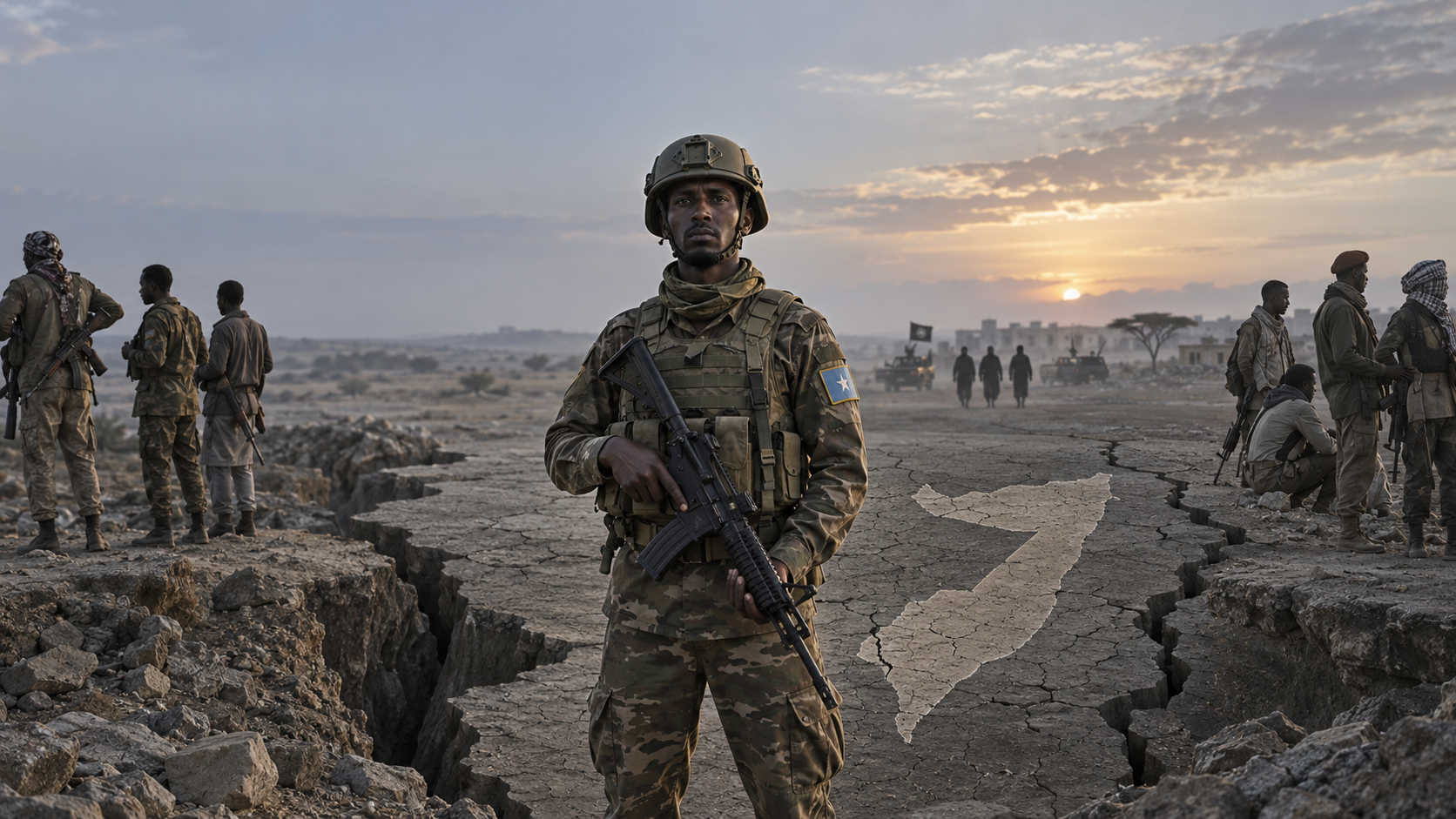
The Council on Foreign Relations recently described Al-Shabaab as one of Al-Qaeda’s most resilient affiliates, arguing that it survives by exploiting weak state authority, clan divisions, and humanitarian crises. That assessment is especially relevant to Somalia today. Al-Shabaab’s endurance cannot be explained by military strength alone. The organization survives because Somalia’s political and security institutions remain divided.
The events in Baidoa illustrate this danger.
After Abdiaziz Laftagareen left the South West State presidency, armed forces reportedly loyal to him continued fighting federal troops. Reuters reported that federal positions were attacked with explosives-laden vehicles during the August 17, 2026 clashes. On September 3, Somalia’s Ministry of Defense alleged that Al-Shabaab participated in another attack alongside Laftagareen-aligned forces.
Intellectual honesty requires us to preserve that distinction. There is documented evidence that armed forces loyal to a former regional leader attacked the Somali National Army. There is also an official government allegation that Al-Shabaab participated. Independent evidence is also sufficient to conclude that Laftagareen entered a formal alliance with Al-Shabaab. That does not make the situation less serious. In some ways, the facts are troubling enough.
When a political leader can leave office but retain an armed force capable of attacking the national army, Somalia is not dealing with an ordinary political disagreement. It is confronting a structural national-security failure. Elections, constitutional disputes and disagreements over federal power should be settled through institutions—not suicide vehicles, militias or battles inside cities filled with civilians.
The larger danger is not limited to Baidoa. Similar conditions exist wherever regional leaders control forces that are more loyal to an individual political figure than to Somalia’s constitutional order. If the Federal Government attempts to establish uncontested authority in Kismayo, forces loyal to Ahmed Madobe could resist. It would be irresponsible to claim as fact that Madobe will join Al-Shabaab. Nobody can prove a future event. But it would be equally irresponsible to ignore the possibility that a confrontation could benefit Al-Shabaab or produce temporary cooperation between actors fighting the same federal forces.
Insurgent alliances are rarely neat. They do not always begin with public agreements or shared ideology. They can take the form of coordinated timing, tolerated movement, exchanged intelligence, common supply routes, or attacks against the same opponent. One side may believe the arrangement is temporary. Al-Shabaab only needs the opening.
This is precisely whySomalia’ss present security structure is unsustainable.
Federalism is not the enemy. Somalia needs local government, regional representation and constitutional limits on central power. The country’s history gives Somalis good reason to distrust excessive centralization. But federalism does not require every regional president to possess a personal army, independent military relationships, and enough firepower to challenge the national government.
The United States has fifty states, but it does not have fifty competing national armies. Germany, India, and other federal countries preserve regional authority while keeping national defense under one constitutional command. Somalia should not accept armed political fragmentation as an unavoidable feature of federalism.
The Federal Government must hold primary and effective authority over national defense, heavy weapons, military intelligence, borders, and strategic installations. Regional police should protect communities and enforce local law. They should not function as private armies that can be mobilized whenever a political leader loses office or rejects a federal decision.
International partners must also reconsider how they distribute assistance. For years, foreign governments have frequently worked directly with regional administrations because federal institutions were weak. That approach may have produced short-term tactical partnerships, but it has also risked strengthening competing centers of armed authority. Somalia cannot build a coherent state if foreign partners treat every regional leader as a separate national government.
Future international security assistance should follow clear principles:
All regional forces must be registered, biometrically identified, and placed within a transparent national security framework. Heavy weapons and military equipment must remain under accountable national control. Salaries should be paid through auditable systems that prevent commanders from maintaining ghost soldiers or private formations. Training should emphasize constitutional duty rather than personal, regional, or clan loyalty. Foreign governments should coordinate security agreements withSomalia’ss recognized federal institutions instead of creating rival chains of command.
This does not mean giving Mogadishu unlimited power. A strong national army without civilian oversight could create another problem. Parliament, courts, independent auditors, and lawful regional institutions must be able to hold the federal security establishment accountable. The objective is not domination by Mogadishu. It is a professional national system in which no president—federal or regional—can turn public forces into personal property.
Critics may argue that strengthening federal institutions will intensify political tensions. But the present arrangement already produces conflict. Parallel armies do not protect compromise; they allow every constitutional disagreement to carry the threat of war. A political system cannot mature when leaders negotiate with armed units standing behind them.
Others may argue that local clan forces are necessary because the national army cannot defend every community. Local forces have indeed made important contributions against Al-Shabaab, particularly the Ma’awisley uprisings in central Somalia. Their courage should be recognized. But community mobilization during an emergency is not a permanent substitute for a national defense system. These fighters should be vetted, traine,d and integrated where appropriate—not abandoned, exploited by politicians, or left outside any accountable command.
Al-Shabaab understands Somalia’s fractures better than many of Somalia’s partners do. It studies local grievances, clan disputes, political rivalrie,s and gaps in government authority. It does not need to defeat the entire Somali state in a conventional war. It only needs Somali institutions to remain divided long enough for the organization to recover, recruit, tax communities, and return to areas abandoned by competing forces.
Every battle between federal troops and a regional political militia gives Al-Shabaab breathing room. Every divided command structure weakens military intelligence. Every politician who mobilizes clan identity against national institutions supplies the organization with another grievance to exploit. Somalia’Somalia’s
Somalia’s war will therefore not be won by airstrikes alone. Airstrikes can eliminate commanders and destroy equipment, but they cannot repair political fragmentation. Nor can temporary offensives succeed if rival Somali authorities later contest liberated territory.
The path to lasting peace is demanding but clear: build trustworthy federal institutions, establish one accountable national army, integrate legitimate regional forces, protect meaningful local government, and end the practice of allowing political leaders to maintain private military power.
Somalia does not need less federalism. It needs real federalism—government divided by constitutional responsibility, not sovereignty divided among armed personalities.
Al-Shabaab survives in the space between Somalia’s institutions. Close that space, and the organization loses its greatest strategic advantage.
