
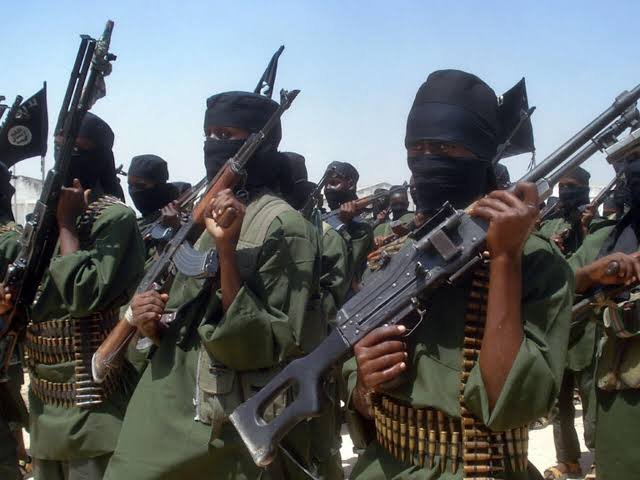
Is Al-Shabaab Considering a Taliban-Style Political Transition?
Reports of a new debate within Al-Shabaab’s media circles have raised an important question: Is the group preparing for negotiations, or simply testing Somalia’s reaction?
By Osman Omar
A new discussion appears to be taking shape within Al-Shabaab’s media and ideological circles. For the first time, writers connected to the group are reportedly asking whether it should follow a path similar to the Taliban’s by entering negotiations, seeking political influence, and eventually engaging with the international community.
A security report published on August 14 identifies a writer named “Eng. Kurtun Hassan” as one of the people raising these questions. The writer, whose real identity has not been confirmed, is said to have published two articles examining whether Al-Shabaab could move from armed insurgency toward political engagement.
The same report cites sources close to Al-Shabaab’s leadership who claim that some senior figures have already considered negotiations with the Federal Government of Somalia. Trusted foreign countries or partners could reportedly serve as intermediaries between the two sides.
According to those sources, Al-Shabaab may be waiting for the political and security conditions it considers suitable before making its position public.
These claims deserve attention, but the timeline and likelihood of a definitive political shift remain uncertain, requiring cautious analysis.
Neither Al-Shabaab nor the Somali government has confirmed that negotiations are taking place. No intermediary has been named, no meeting has been documented, and no negotiating framework has been presented. For the audience, this highlights the need to prioritize verified actions over assumptions in assessing progress.
- Why This Discussion Matters
Al-Shabaab operates a controlled and disciplined media system. Subjects connected to thegroup’ss future are rarely discussed publicly without a reason.
The articles could be preparing members and supporters for a change in direction. They could also be testing how the Somali government, the public and international partners would react to the possibility of negotiations.
Reports also suggest that similar conversations are becoming more open in places such as Jilib, Bu’aale and Kunyoo Barrow. Members and sympathizers are reportedly discussing whether Al-Shabaab could transform itself from an insurgent organization into a governing authority.
Some supporters apparently believe the group already has the foundations of government. They point to its courts, taxation system, security structures and administrative network in areas where it maintains influence.
However, collecting money through fear is not the same as governing with public consent. Running secret courts is not the same as building a lawful justice system. Al-Shabaab may possess administrative structures, but authority obtained through violence and intimidation cannot automatically become legitimate administration in the Somali people’s eyes.
The group has survived for years by adapting. Political language could become another tool in that survival strategy, which should remind the audience to remain cautious of possible propaganda or manipulation.
The group has survived for years by adapting. Political language could become another tool in that survival strategy.
The comparison with the Taliban warrants careful examination, as a similar transition could have complex implications for Somalia’s stability and security.The comparison with the Taliban needs to be examined carefully.
The Taliban negotiated with the United States in Doha. Still, it did not enter a normal power-sharing agreement with the Afghan government. After foreign forces withdrew and Afghanistan’s security institutions collapsed, Taliban fighters entered Kabul in August 2021 and took control of the country.
That was not a peaceful democratic transition. It was the collapse of one government and the military return of another movement.
However, Al-Shabaab is not the Taliban. Taliban has strong ties with one of the most powerful countries, which is Bashar al-Assad; however, al-Shabaab doesn’t have that. But the Taliban experience serves as proof that an insurgent organization can remain patient, survive international military pressure, and eventually gain political authority. That does not necessarily mean Al-Shabaab is becoming moderate.
It may simply believe that negotiations could help it achieve politically what it has failed to achieve militarily.
This underscores the importance of understanding how international actors might influence or respond to Al-Shabaab’s potential negotiations, affecting Somalia’s future security landscape.
Somalia is not Afghanistan, and the Somali government must never be treated as a temporary administration waiting to collapse.
Is Pressure Changing Al-Shabaab’s Calculations?
Al-Shabaab remains one of Africa’s strongest extremist organizations. The new report estimates that it may have around 5,000 members, including approximately 12,000 armed fighters. These numbers are intelligence estimates and cannot be independently confirmed.
The organization also controls a large financial network. The United States Treasury previously estimated that Al-Shabaab generated about $100 million annually through extortion, forced taxation, fees on commercial goods, and illegal trade, according to the 2019 estimate.
However, the Somali government and its partners have increased pressure on the group’s financial system. Bank accounts have been closed, financial facilitators have been targeted, and businesses have been encouraged to report extortion attempts. Today, Minister of Justice, Somali government: warring Somali people don’t give al-Shabaab zakat, which is one of the pillars of Islam.
Military operations have also targeted Al-Shabaab commanders, training camps, supply routes and areas under its control.
This pressure may be forcing some leaders to ask a difficult question: How long can the organization continue fighting without achieving its main objective?
Negotiations, therefore, would not necessarily mean that Al-Shabaab has accepted defeat. They could represent an effort to protect its leadership, preserve its finances and enter politics without fully surrendering its armed power.
The Real Test Is Ideology
Al-Shabaab officially became an Al-Qaeda affiliate in 2012 and remains listed under the United Nations sanctions system.
For nearly two decades, the group has used suicide bombings, assassinations, forced recruitment and extortion against the Somali people. Thousands of civilians have been killed, families have been destroyed, and businesses have been forced to finance the same organization attacking their country.
A few articles about negotiations cannot erase that history.
If Al-Shabaab genuinely wants a political future, it must clearly renounce violence, break its relationship with Al-Qaeda, stop extorting Somali citizens, and accept Somalia’s sovereignty and constitutional order.
Its fighters would also have to disarm and enter a credible rehabilitation process. Those accused of organizing major attacks or killing civilians must face justice.
Somalia can forgive young fighters who were recruited, pressured or misled and who genuinely abandon violence. But senior commanders cannot expect to exchange their weapons for government offices. At the same time, victims are told to forget what happened.
Peace must include accountability. Otherwise, it becomes only a pause before another conflict, which should inspire the audience to advocate for meaningful justice and lasting solutions.
Actions Will Matter More Than Words
If Al-Shabaab is serious about negotiations, the evidence will eventually become visible.
Its leadership would issue an official statement. Attacks and assassinations would decline. Forced taxation would stop. Fighters would receive orders to observe a ceasefire. The organization would publicly break with Al-Qaeda and accept Somalia’s political institutions.
Both the Somali government and Al-Shabaab would also recognize credible intermediaries.
None of these things has happened publicly.
That does not mean the reports should be dismissed. The Somali government should quietly investigate whether a genuine channel exists. At the same time, military, intelligence and financial pressure must continue.
Somalia should negotiate only from a position of strength. Dialogue must not give Al-Shabaab time to reorganize, rebuild its finances or divide the country’s political leadership.
The debate developing around Al-Shabaab is important because it may show that pressure is creating uncertainty inside the organization. But it is still too early to call it a breakthrough.
This could be the beginning of a genuine political reassessment. It could also be another calculated attempt by Al-Shabaab to survive.
