
By Osman Omar
On August 12, 2026, something special happened for Somalis watching football around the world.
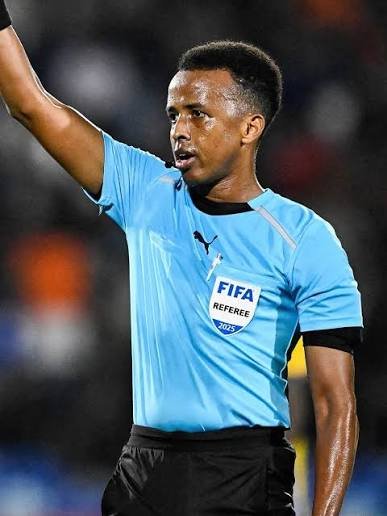
In Salzburg, Austria, Omar Abdulkadir Artan walked onto one of European football’s biggest stages as the referee of the UEFA Super Cup. For many people, it was simply another major football match. For Somalis, it meant something more.
There was a Somali at the center of the field, trusted with one of the biggest responsibilities in European football.
The 34-year-old Somali referee has been on FIFA’s international list since 2018 and was named CAF Men’s Referee of the Year in 2025. He did not reach this level overnight. It took years of work, discipline, experience and consistency.
That is what makes his story powerful.
Somalis today live across the world. Large communities can be found in Britain, the United States, Canada, Sweden, Norway, Kenya, the Gulf states and many other countries. At home, millions of young Somalis are also trying to build their futures despite the difficulties the country has faced.
On a night like this, those distances suddenly feel smaller.
A young Somali in Mogadishu could be watching the same referee as another Somali in London, Minneapolis, Toronto or Stockholm. They may live thousands of miles apart and have completely different lives, but when Omar Artan walks onto that field, they recognize the same thing.
He is one of us.
That feeling matters.
Somalis spend plenty of time arguing about politics, regions, and clan differences. Those disagreements are real, but they should not become the only story we tell about ourselves. A country also needs moments when people can be proud of someone because he has carried their name with dignity.
Omar Artan has given Somalis one of those moments.
His achievement also sends an important message to Somali youth. There are talented young Somalis everywhere. Some will become doctors, engineers, business leaders, athletes, scientists, journalists and diplomats. Others may follow Artan into international sport.
What they need is opportunity, education, discipline and institutions that recognize talent.
Somalia cannot afford to waste another generation of capable young people.
Perhaps somewhere in Mogadishu, a young boy watched Artan standing confidently among some of the biggest names in world football. Maybe that child did not understand everything about refereeing or UEFA. But he understood something much simpler.
A Somali had made it there.
And sometimes that is enough to change how a young person sees his own future.
Omar Artan went to Salzburg to work as a referee. He returned with something much bigger than a successful match.
He gave Somalis another reason to believe that their country should not be defined only by its problems.
Somalia can also be represented by excellence, professionalism, and achievement.
And on that night, Omar Artan carried that message onto the field for all of us.
