• About WordPress
    • WordPress.org
    • Documentation
    • Learn WordPress
    • Support
    • Feedback
  • Log in
  • AMP
    • View AMP version
  • Edit Home Page
Close Menu
Qaran24 News
  • Home
  • Warka
  • News English
  • Opinion
  • Business
  • Contact Us
  • About us
  • Authors
  • Privacy Policy
Categories
  • Authors
  • Awdal State
  • Business
  • Galmudug
  • Hirshabelle
  • legal opinion
  • News English
  • Opinion
  • Puntland
  • Somalia
  • Somaliland
  • SSC Khaatumo
  • Warka
X (Twitter) Facebook
X (Twitter)
Qaran24 News
  • Home
  • Warka
  • News English
  • Opinion
  • Business
  • Contact Us
  • About us
  • Authors
  • Privacy Policy
Tuesday, August 4
Qaran24 News
  • Home
  • Warka
  • News English
  • Opinion
  • Authors
  • About us
  • Contact Us
qaran24.com » Opinion » A Critical Response to the Claims Against Villa Somalia
Opinion

A Critical Response to the Claims Against Villa Somalia

Abdullahi M Hassan (Abdullahi Yabarow)By Abdullahi M Hassan (Abdullahi Yabarow)17 September 2024Updated:17 September 2024No Comments8 Mins Read
Facebook Twitter Pinterest LinkedIn Tumblr WhatsApp VKontakte Email
Share
Facebook Twitter LinkedIn Pinterest Email
A Critical Response to the Claims Against Villa Somalia

The article presents a highly controversial view against Villa Somalia, accusing it of orchestrating a deliberate campaign to weaken Puntland’s autonomy and prosperity. However, upon closer inspection, the argument is riddled with significant flaws, including a reliance on unverified claims and a misunderstanding of the federal dynamics involved. This response seeks to break down these points and offer a more balanced view of the matters under consideration.

  1. Mischaracterization of Federal Responsibilities: The article claims that Villa Somalia is launching an “all-out war” against Puntland by centralising control, particularly in the education sector. However, it overlooks the fact that the Federal Government of Somalia (FGS) is constitutionally mandated to coordinate national policies, including education, to ensure uniformity and fairness throughout the country. Article 30 of the Somali Constitution clearly defines the State’s responsibilities in education, highlighting the right to free education up to the secondary level (Article 30(2)), the prioritisation of public education (Article 30(3)), and the importance of a standardised curriculum across all schools (Article 30(6)). Describing these actions as a power grab fails to recognise the complexities of federal governance in Somalia, where the Federal Government must balance maintaining national unity with respecting regional autonomy. The constitutional requirement for a standardised curriculum highlights the need for federal oversight to ensure consistent educational standards across all regions, including Puntland.
  2. Speculative Accusations Lacking Evidence: The article’s allegations of corruption, conflict of interest, and personal gain against President Dr Hassan Sheikh Mahamud and Minister Farah Sheikh are largely speculative and lack substantial evidence. It is crucial to distinguish between valid concerns about governance and unverified claims that merely contribute to political tension. For instance, the accusations of financial misconduct in the education sector are made without reliable data or credible sources, rendering them more speculative than grounded in fact. Furthermore, the Constitution (Article 30(4)) permits the creation of private educational institutions in compliance with legal standards and in alignment with the national curriculum. This clause underscores the significance of legal regulations and federal supervision in preserving the quality and integrity of education, ensuring that private interests do not compromise public education objectives.
  3. The Role of Puntland in National Stability and the President’s Actions: Although the article appropriately highlights Puntland’s role in state-building and security, it overlooks the larger context in which these efforts occur. Like other federal member states, Puntland operates within a national framework where the Federal Government of Somalia (FGS) is key in coordinating actions against threats like Al-Shabaab and in finalising the Provisional Constitution. Moreover, it’s essential to examine the political dynamics that unfolded after the selection of the Prime Minister. When the President of Puntland failed to obtain the Prime Minister position, there was a clear change in the regional leadership’s attitude towards the Federal Government. This change manifested in a series of aggressive moves that heightened tensions between Puntland and Villa Somalia. These actions prompt questions about whether the grievances expressed are truly based on constitutional issues or are influenced, at least partially, by personal and political frustrations. Additionally, in Somalia’s political sphere, it is quite common for intellectuals like Prof. Hassan Keynan to express strong opposition through articles and papers for personal reasons. This pattern leads to worries about intellectual dishonesty, as these writings often lack substance or value, being fuelled more by personal discontent than by objective analysis. When such critiques are grounded in personal grievances, they can skew public discourse and exacerbate tensions, further straining the relationship between Puntland and the Federal Government of Somalia (FGS).
  4. Oversight, Resource Allocation, and the Role of the NCC: The article criticises the Federal Government of Somalia (FGS) for supposedly withholding Puntland’s portion of external aid and using donor funds for political manipulation. However, it overlooks the genuine need for oversight and accountability in the distribution of these funds. The claim that oversight is a “bogus” issue is unpersuasive; it is crucial for any government, especially in a fragile state like Somalia, to ensure that aid is utilised effectively and reaches its intended recipients. Additionally, the Constitution requires the State to focus on the development and expansion of public education (Article 30(3)). This calls for a coordinated effort at the federal level to ensure that resources are distributed fairly and transparently so that every region, including Puntland, receives the support needed to address educational needs. Should Puntland have any issues or concerns regarding resource distribution or the execution of federal duties, these should be presented to the National Consultative Council (NCC). The NCC provides a suitable platform for all federal member states, including Puntland, to engage with the federal government in discussions and dispute resolution. Constructive dialogue within this framework is likely to be more effective than public disputes, which could exacerbate divisions and weaken national unity.
The Complex Dynamics of Somalia and Ethiopia: A Call for Unity and Sovereignty
  1. Puntland’s Representation in the Federal Parliament: It’s important to note that Puntland is represented in the federal government. It has MPs and Senators in the Federal Parliament, particularly in the Upper House, which represents the Federal Member States. As outlined in the Somali Constitution, Title Three: The Legislative Powers of the Upper House of the Federal Parliament, Articles 71-74, these representatives play key roles. They are involved in amending the Constitution, approving or rejecting legislation, electing and removing the President, and engaging in decisions regarding war or a state of emergency. These Senators and MPs are in a prime position to express Puntland’s concerns and impact national decisions through constitutional channels. Their roles ensure that the region’s interests are addressed via legislative processes rather than through external conflicts or public disputes. Leveraging these avenues enhances Puntland’s standing within the federal system and upholds the principles of federalism enshrined in the Constitution.
  2. Overgeneralization and Lack of Nuance: The article broadly accuses Villa Somalia of pushing a sectarian agenda without providing specific, detailed evidence of this. The term “sectarian” is charged and suggests deep-rooted divisions based on religion, ethnicity, or clan. However, the article fails to demonstrate how Villa Somalia’s actions are explicitly sectarian rather than political or administrative disagreements. The claim that Puntland is the “most peaceful and successful” member state is presented as fact without acknowledging that success and peace are relative terms that might be perceived differently across Somalia. For instance, other regions may also consider themselves successful based on their unique circumstances and contributions to the federal structure.
  3. Lack of Concrete Solutions: The article concludes with broad recommendations, such as the need for Villa Somalia to “restrain rogue elements” and “restore reason and sanity.” However, it fails to offer specific, actionable solutions or a clear roadmap for resolving the tensions between Villa Somalia and Puntland. The recommendations are vague and lack the practical detail needed to be implementable. The article focuses on the symptoms of the conflict between Villa Somalia and Puntland but does not adequately address the underlying causes, such as historical grievances, economic disparities, or differing visions for federalism. A more comprehensive analysis would consider these root causes and propose mechanisms for reconciliation and conflict resolution.
  4. Exaggeration and Alarmism: The article suggests that the entire nation is “in peril” due to the actions of Villa Somalia. While political tensions are indeed concerning, the article’s alarmist tone may exaggerate the immediacy and severity of the threat. A more measured tone would help in fostering dialogue rather than further entrenching divisions. The article calls on the international community to intervene but does not critically assess the implications of external involvement in Somalia’s internal affairs. The suggestion that foreign aid could become a “curse” is not sufficiently explored, leaving the reader with an incomplete understanding of the potential risks and benefits of international engagement.

Conclusion: Moving Toward a Collaborative Future

The relationship between Puntland and Villa Somalia is intricate, influenced by federalism, governance issues, and national security challenges. It is essential to acknowledge and address Puntland’s concerns, but these should not be viewed as a zero-sum conflict with the Federal Government of Somalia (FGS). Both sides have a common goal of Somalia’s stability and development, necessitating a commitment to dialogue, transparency, and mutual respect. The Somali Constitution, especially Article 30, outlines a clear legal framework for the State’s role in education.

Adhering to and implementing this framework is crucial for ensuring fairness, consistency, and quality across all federal member states. Instead of continuing to highlight conflict, it is crucial to emphasise the collaborative opportunities within Somalia’s federal system. Addressing the country’s challenges, such as security threats and the need for constitutional reforms, requires a cooperative approach that values the input of all federal member states, including Puntland. Utilising the NCC as a forum for dialogue and resolution, alongside active involvement from Puntland’s MPs and Senators in the Federal Parliament, is essential for achieving these objectives.

Furthermore, upholding intellectual integrity and concentrating on constructive, evidence-based criticism will more effectively advance Somalia’s unity and progress. Only by working together can Somalia achieve the stability and prosperity that its people deserve. This response integrates the role of intellectuals in shaping public discourse and emphasises the importance of intellectual honesty. It also supports using constitutional and political structures to address conflicts within Somalia’s federal system.
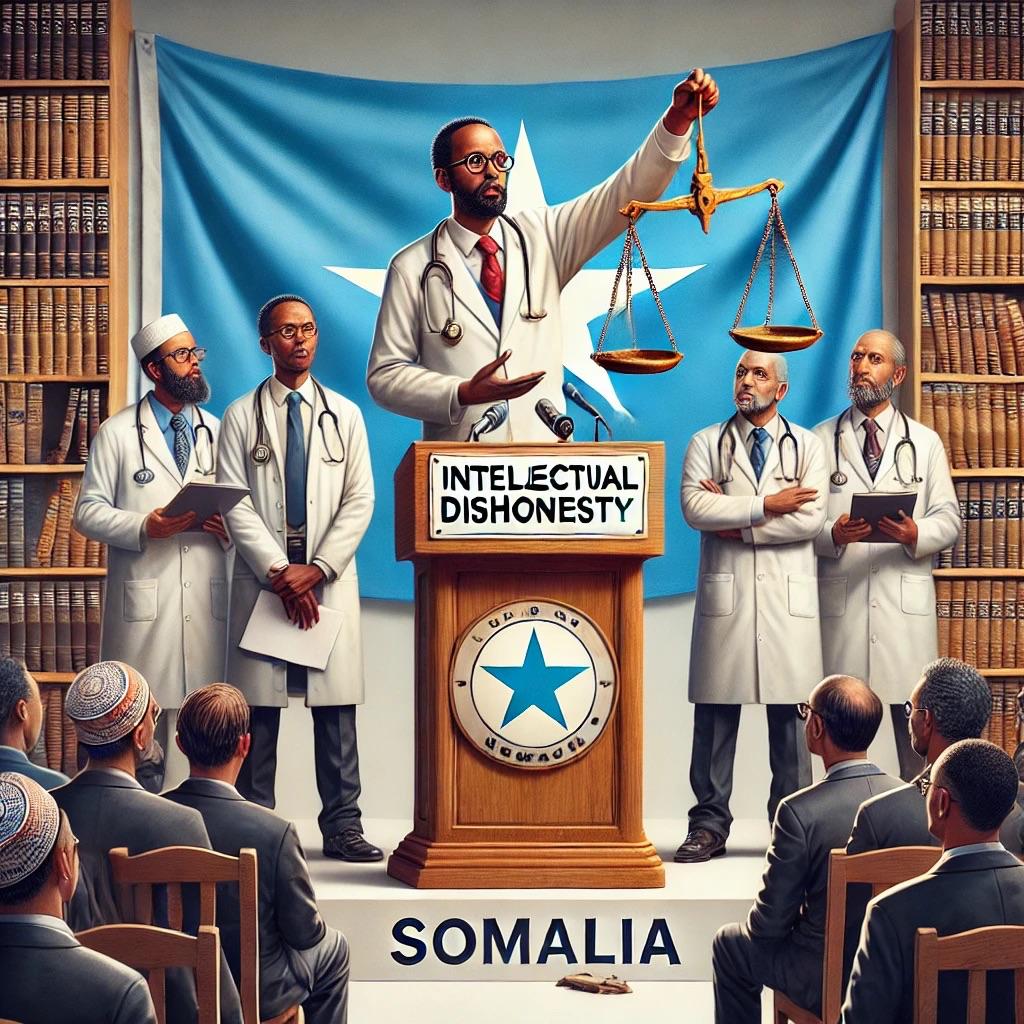
A Critical Response to the Claims Against Villa Somalia: Analysing the Puntland-FGS Dispute
Share. Facebook Twitter Pinterest LinkedIn Tumblr WhatsApp Email
Previous ArticleMaxkamadda Soomaaliya oo Xirtay Madaxa Shaqaalaha Shirkadda Favori.
Next Article ONLF Releases Statement on Deteriorating Situation in Somali State Ogaden
Abdullahi M Hassan (Abdullahi Yabarow)
  • X (Twitter)

Abdullahi M Hassan ( Abdullahi Yabarow), Legal Researcher, Co-founder and Director of the Federal Dialogue, the National Unity Programme, and the Legal Office at Mowlac Forum, a Somali-based research organisation. He holds a Master of Laws (LLM) and is a legal researcher, political scholar, and international legal advisor. His expertise includes public international law, human rights law, and federal dialogue processes, focusing on legal reform, governance, and state-building in post-conflict and transitional contexts. Abdullahi remains dedicated to advancing inclusive governance, legal development, and the rule of law through research, advocacy, and strategic legal counsel at national and international levels.

Related Posts

They Predicted Mogadishu Would Fall Somalia Proved Them Wrong

They Predicted Mogadishu Would Fall—Somalia Proved Them Wrong

28 July 2026
Falanqayn uu qoray Somali Insider Warqad furan oo uu Golaha Mustaqbalka Soomaaliyeed 27-kii Luulyo 2026 u diray dalalka ciidamada iyo booliska ku biiriya Hawlgalka Midowga Afrika ee Soomaaliya—AUSSOM. Waxay daaha ka rogtay weji cusub oo uu galay khilaafka siyaasadeed ee Soomaaliya. Goluhu warqadda kuma uusan koobin madaxda Uganda, Kenya, Itoobiya, Jabuuti, Burundi iyo Masar. Nuqullo ayuu sidoo kale u diray Midowga Afrika, IGAD, waddamada Afrika ku metela Golaha Ammaanka, Maraykanka, Ingiriiska, Midowga Yurub, Turkiga iyo hay’adaha Qaramada Midoobay. Dusha sare, farriintu waa mid macquul u muuqata: in heshiis siyaasadeed oo Soomaali leedahay uu saldhig u noqdo kala-guurka amniga. Hase yeeshee, marka si taxaddar leh loo akhriyo, warqaddu wada-hadal oo keliya ma dalbanayso. Waxay beesha caalamka ka codsanaysaa inay cadaadis saarto Dowladda Federaalka, taageertana dhismaha gole ku-meel-gaar ah oo kormeera isbeddelka dastuurka iyo doorashooyinka. Halkaas waxaa ka dhalanaya su’aasha ugu muhiimsan: Golaha Mustaqbalka Soomaaliyeed muxuu matalaa, yaase awood u siiyay inuu magaca shacabka Soomaaliyeed kula hadlo dowlado shisheeye? Siyaasiyiin miisaan leh, balse aan haysan mandat dadweyne Golaha Mustaqbalka Soomaaliyeed waxaa la aasaasay bishii Oktoobar 2025. Waxaa ku mideysan Madaxweynaha Puntland Saciid Cabdullaahi Deni, Axmed Maxamed Islaam—Axmed Madoobe, Madaxweynihii hore Shariif Sheekh Axmed, ra’iisul-wasaareyaal hore iyo siyaasiyiin kale oo mucaarad ah. Kulankii Golaha ee Kismaayo waxaa ka qaybgalay Xasan Cali Khayre, Maxamed Xuseen Rooble, Cabdi Faarax Shirdoon iyo Cabdiraxmaan Cabdishakuur Warsame. Kuwani ma aha siyaasiyiin aan la aqoon. Qaar ayaa dalka soo hoggaamiyay, halka kuwo kalena ay weli maamulaan dowlad-goboleedyo. Sidaas darteed, codkooda si fudud looma iska indho tiri karo. Laakiin saameyn siyaasadeed iyo matalaad dadweyne isku mid ma aha. Goluhu weli ma uusan soo bandhigin taageeradiisa iyadoo lagu cabbiray doorasho toos ah. Siyaasiyiintiisa Muqdisho jooga kuma laha magaalada awood fulineed ama ciidan. Maamulka Jubaland awooddiisa dhabta ahi waxay inta badan ku urursan tahay Kismaayo iyo deegaanno kooban. Puntland waxay maamushaa dhul ballaaran, balse iyaduna waxay wajahaysaa muranno siyaasadeed, caqabado amni iyo cadaadis dhaqaale. Sidaas awgeed, Golaha Mustaqbalka waa isbahaysi mucaarad oo muhiim ah, laakiin ma aha hay’ad qaran oo si toos ah loo doortay. Xubnihiisu waxay leeyihiin xaq ay ku mucaaradaan, ku abaabulmaan, kuna tartamaan doorashada. Laakiin mucaaradnimadu ma siinayso awood ay si joogto ah ugu hor istaagaan xuquuqda muwaadiniinta ee ah inay codkooda dhiibtaan. Maxay warqaddu dhab ahaan dalbanaysaa? Warqaddu waxay xambaarsan tahay saddex dalab oo waaweyn. Marka koowaad, Goluhu wuxuu doonayaa in waddamada taageera AUSSOM ay kaalmadooda amni ku xiraan heshiis siyaasadeed oo cusub. Marka labaad, wuxuu ku baaqayaa in la dhiso gole ku-meel-gaar ah oo loo dhan yahay, kaas oo kormeera isbeddelka dastuurka, doorashooyinka iyo kala-guurka hay’adaha qaranka. Marka saddexaad, wuxuu ku eedaynayaa Dowladda Federaalka inay siyaasadaysay Ciidanka Xoogga Dalka iyo hay’adaha kale ee dowladda. Wuxuu sidoo kale ku doodayaa in ciidamada Puntland iyo Jubaland, oo ay weheliyaan Ciidanka Xoogga Dalka ee furimaha ku dagaallamaya, aan la siin taageeradii ku filnayd ee ay ugu baahnaayeen dagaalka Al-Shabaab iyo Daacish. Eedeymahan waa kuwo culus. Haddii ay jiraan caddeymo lagu taageerayo, waa in si madax-bannaan loo baaro. Hase yeeshee, warqaddu lafteedu ma soo bandhigayso caddeyn ku filan oo xaqiijinaysa dhammaan sheegashooyinka la jeediyay. Waxaa kaloo walaac leh in muran siyaasadeed oo gudaha ahi lagu xiro mustaqbalka hawlgalka Afrika ee la dagaallamaya argagixisada. Taasi waxay dhalin kartaa in taageerada amniga loo adeegsado qalab lagu cadaadiyo dowladda si ay u aqbasho dalabaadka mucaaradka. Khilaafka siyaasadeed waa in lagu xalliyaa wada-hadal, dastuur iyo doorasho—ma aha in lagu ciyaaro badbaadada ciidamada dagaalka kula jira Al-Shabaab. Laba aragti oo ku loollamaya mustaqbalka dalka Khilaafka maanta ka jira Soomaaliya ma aha oo keliya dagaal u dhexeeya Villa Soomaaliya iyo koox siyaasiyiin ah. Waa loollan u dhexeeya laba aragti oo kala duwan. Dowladda Federaalka waxay doonaysaa in Soomaaliya laga gudbiyo nidaamkii doorashada dadban, kaas oo xildhibaannada lagu soo xuli jiray odayaal, ergooyin kooban iyo heshiisyo qabiil. Waxay ku doodaysaa in awooddaas loo wareejiyo shacabka iyadoo la hirgelinayo qof iyo cod. 25-kii Diseembar 2025, Muqdisho waxaa ka dhacday doorashadii deegaanka ee tooska ahayd ee ugu horreysay tan iyo 1969. In ka badan 900,000 oo qof ayaa la sheegay inay isdiiwaangeliyeen, inkastoo mucaaradku dhaliilay habka loo maamulay iyo maqnaanshaha heshiis siyaasadeed oo ballaaran. Doorashooyin toos ah ayaa sidoo kale laga hirgeliyay ama loo diyaariyay qaybo ka mid ah Koonfur Galbeed, halka Galmudug ay ka socdaan ololeyaal iyo dhaqdhaqaaqyo siyaasadeed. Waxaa cad in qof iyo cod uusan hadda ahayn hadal lagu qurxiyo fagaaraha. Wuxuu yeeshay diiwaangelin, ururro siyaasadeed, musharraxiin iyo olole ay dadku ka qaybgalayaan. Golaha Mustaqbalka wuxuu qabaa in isbeddelka dastuurka iyo nidaamka doorashadu u baahan yihiin heshiis siyaasadeed oo loo dhan yahay, halkii ay Dowladda Federaalka kaligeed dejin lahayd xeerarka tartanka. Walaacaas waa in la maqlo. Doorasho aan furanayn, aan lagu kalsoonayn ama aan lahayn tartan dhab ah waxay abuuri kartaa khilaaf cusub. Qof iyo cod magac ahaan loo qabto, balse natiijadiisa hore loo sii og yahay, ma aha dimuqraadiyad. Laakiin heshiis la’aanta siyaasiyiinta looma adeegsan karo marmarsiiyo lagu sii hayo nidaam shacabka ka saaraya go’aanka dalkooda. Doorashadii dadbanayd yaa ka faa’iidi jiray? Nidaamkii dadbanaa wuxuu awoodda ku ururiyay gacanta odayaal, ergooyin, madax dowlad-goboleedyo, siyaasiyiin iyo maalgeliyeyaal. Muwaadinka caadiga ahi cod ma lahayn. Wuxuu daawanayay iyadoo mustaqbalkiisa lagu kala iibsanayo hoteello, guryo gaar loo leeyahay iyo shirar albaabadu u xiran yihiin. Nidaamkaasi wuxuu abuuray suuq siyaasadeed ay lacagtu saameyn weyn ku lahayd cidda baarlamaanka gasha. Waxa kale oo uu u furay maalgelin aan daahfurnayn—mid gudaha iyo mid dibaddaba—inay go’aamiso cidda matalaysa shacabka. Qof iyo cod keliya ma xallinayo qabyaaladda, musuqmaasuqa iyo faragelinta shisheeye. Laakiin wuxuu ugu yaraan siyaasiga ku qasbayaa inuu shacabka hor tago, codkoodana weydiisto. Taasi waa tallaabo laga soo qaaday qolalka heshiisyada laguna dhaqaaqay dhinaca waddada, xaafadda iyo sanduuqa codbixinta. Horumarka waa la dhaliili karaa, laakiin lama dafiri karo Warqadda Golaha Mustaqbalka waxay sawiraysaa dal ku jira burbur siyaasadeed, balse si yar ayay u xusaysaa horumarka ka socda Soomaaliya. Bangiga Adduunku wuxuu sheegay in Soomaaliya ay horumar ka samaysay dhismaha hay’adaha, dib-u-habeynta dhaqaalaha iyo maaraynta maaliyadda dowladda. Isla markaas, wuxuu ka digay saboolnimada, amni-darrada, isbeddelka cimilada iyo hoos u dhaca gargaarka caalamiga ah. Dhaqaalaha Soomaaliya waxaa la saadaaliyay inuu koro 2.8% sannadka 2026 iyo 3.1% sannadka 2027. Muqdisho weli ma aha magaalo dhib kasta ka gudubtay. Hase yeeshee, ganacsiga, dhismaha, maalgashiga iyo nolosha bulshada ayaa muuqata inay ka firfircoon yihiin sidii hore. Magaalo sannado badan astaan u ahayd burburka ayaa maanta si tartiib ah dib ugu soo ceshanaysa shaqadeedii caasimadnimo. Horumarkaas macnihiisu ma aha in dowladda laga aamuso khaladaadkeeda. Laakiin mucaaradnimaduna ma aha inay qofka ku khasabto inuu dafiro wax kasta oo wanaagsan oo dalka ka socda. Dowladda waa in lagula xisaabtamaa hufnaanta doorashooyinka, xorriyadda siyaasadeed, dastuurka iyo ilaalinta mucaaradka. Sidoo kale Golaha Mustaqbalka waa in la weydiiyaa: muxuu yahay qorshihiisa beddelka ahi? Yaa shacabka uga wakiishay? Sideese gole ku-meel-gaar ahi uga duwanaanayaa heshiisyadii hore ee xilalka loogu qaybsan jiray isla siyaasiyiinta? Maxay beesha caalamku Golaha ula hadlayso? Dalalka shisheeye Golaha Mustaqbalka ulama xiriiraan sababtoo ah wuxuu caddeeyay inuu haysto taageerada aqlabiyadda shacabka. Waxay ula xiriiraan sababtoo ah Soomaaliya weli waa dowlad federaal ah oo nugul, Puntland iyo Jubalandna waxay leeyihiin muhiimad juqraafiyeed iyo mid amni. Deeq-bixiyeyaashu waxay ka baqayaan in khilaafka siyaasadeed uu wiiqo dagaalka Al-Shabaab ama uu abuuro qalalaase cusub. Waa walaac la fahmi karo. Laakiin raadinta xasillooni degdeg ahi marar badan waxay Soomaaliya dib ugu celisay halkii ay ka soo dhaqaaqday. Marka dowladda dhexe isku daydo isbeddel weyn, waxaa soo noqda baaqii ahaa: “Marka hore siyaasiyiinta hala heshiisiiyo.” Natiijadu waxay noqotaa in siyaasiga awooda inuu wax carqaladeeyo la siiyo miisaan ka weyn kan muwaadinka doonaya inuu si nabad ah u codeeyo. Beesha caalamku waa inay fududeyso wada-hadalka, laakiin ma aha inay noqoto garsooraha ugu dambeeya ee siyaasadda Soomaaliya. Mustaqbalka dalka waa inuu ku xirnaadaa dastuurkiisa, hay’adihiisa iyo codka dadkiisa—ma aha raalli ahaanshaha safaaradaha. Wada-hadal haa, awood diidmo joogto ah maya Isbarbardhigga mararka qaar lagu sameeyo Suudaan wuxuu leeyahay xad. Ciidamada RSF waa ciidan hubeysan oo dagaal ba’an kula jira dowladda Suudaan, halka Golaha Mustaqbalka uu yahay isbahaysi siyaasadeed oo sharci ah. Dowladda Soomaaliya mucaaradkeeda ulama dhaqmi karto sida jabhad hubeysan. Si kastaba ha ahaatee, hal mabda’ ayaa muhiim ah: wada-hadalku ma siin karo koox aan doorasho qaran ku imaan awood ka sarreysa hay’adaha dowladda. Wada-hadalku waa inuu hagaajiyaa nidaamka, furaa tartanka, yareeyaa khilaafka oo ilaaliyaa xuquuqda mucaaradka. Waa inuusan noqon hab mar kasta lagu burburiyo hay’adaha marka siyaasiyiin awood leh ay diidaan geeddi-socodka socda. Doorashada hala saxo—yaan laga noqon Dowladda Federaalka waxaa saaran masuuliyad culus. Waa inay xaqiijisaa in doorashooyinka soo socda ay yihiin kuwo ammaan ah, daahfuran, tartan dhab ah leh, si madax-bannaanna loo kormeero. Mucaaradku waa inuu helaa xorriyad uu ku abaabulo xisbiyo, ku soo bandhigo musharraxiin, ku ololeeyo, ula socdo codbixinta, uguna gudbiyo cabashooyinka hay’ado lagu kalsoonaan karo. Haddii dowladda ay maamusho musharraxiinta, guddiyada iyo natiijada, qof iyo cod wuxuu noqonayaa magac qurux badan oo aan wax macne ah lahayn. Golaha Mustaqbalkuna waa inuu ka gudbaa shirarka siyaasiyiinta iyo waraaqaha loo dirayo dibadda. Haddii xubnihiisu aaminsan yihiin inay shacabka taageero ka haystaan, waa inay dhistaan xisbiyo, soo bandhigaan qorshe cad, una tartamaan codka muwaadiniinta. Soomaaliya uma baahna in mucaaradka la aamusiiyo. Sidoo kale uma baahna in hay’adaha dowladda loo gacan geliyo koox kasta oo awood u leh inay carqalad abuurto. Waxay u baahan tahay dowlad lala xisaabtami karo, mucaarad mas’uul ah, sharci qof walba ka sarreeya iyo muwaadin leh cod la tixgeliyo. Heshiis siyaasadeed waa muhiim. Laakiin heshiis aan shacabka cod siinayn waa heshiis siyaasiyiin—ma aha heshiis qaran. Beesha caalamku waa inay Soomaaliya ku taageertaa inay horay u socoto, halkii ay mar kasta dib ugu celin lahayd nidaamkii ay isku dayaysay inay ka gudubto. Dowladda hadda jirta waa in lagu cadaadiyaa inay hagaajiso doorashada, ee ma aha inay ka tanaasusho. Waa in la taageeraa dadaalka lagu dhammaystirayo qof iyo cod, lagu xoojinayo dagaalka Al-Shabaab, laguna dhisayo hay’ado ka cimri dheer madaxda maanta joogta. Mustaqbalka Soomaaliya laguma go’aamin karo waraaq loo kala diro caasimadaha shisheeye. Waxaa lagu go’aaminayaa codka shacabka Soomaaliyeed.

The Somali Future Council- Whom Does It Represent, and What Is It Asking of the International Community?

27 July 2026

What Defines Somali Identity: Clan, Islam, or the Modern State?

5 May 2026
Somalia’s Quiet Reconstitution

Somalia’s Quiet Reconstitution

13 April 2026
Leave A Reply Cancel Reply

Don't Miss
Ma Ra’yi Madax-bannaan Baa Mise Waa Jilaa Gudanaya Qandaraas? Runta Ka Dambaysa Hoodo Xayinimo facebook account! Somalia
4 Mins Read

Ma Ra’yi Madax-bannaan Baa Mise Waa Jilaa Gudanaya Qandaraas? Runta Ka Dambaysa Hoodo Xayinimo facebook account!

By Qaran242 August 202604 Mins Read

Masraxa guud ee baraha bulshada Soomaalida wuxuu isku baddalay masrax weyn oo dadka qaarkood…

Kampala Hal Weedh oo Dib u Kicisay Dareenka Waddaniyadeed ee Soomaalida

Kampala Hal Weedh oo Dib u Kicisay Dareenka Waddaniyadeed ee Soomaalida

1 August 2026
Kampala The Sentence That Reawakened Somali National Pride

Kampala The Sentence That Reawakened Somali National Pride

1 August 2026
From Affordable Device to Security Threat: How Compromised Laptops Could Endanger Somalia

From Affordable Device to Security Threat: How Compromised Laptops Could Endanger Somalia

31 July 2026
From Affordable Device to Security Threat: How Compromised Laptops Could Endanger Somalia

Laptop  Raqiis ah oo Noqon Kara Khatar Amn- Sida Laptop La Waxyeelleeyey uu Soomaaliya Halis u Gelin Karo

31 July 2026
  • Facebook
  • Twitter
  • Pinterest
  • Instagram
  • YouTube
  • Vimeo
About Us
About Us

Qaran24 is is a reputable news website dedicated to providing accurate and timely information to its readers

Email Us: info@qaran24.com
Contact: +252-710000789

Facebook X (Twitter) Instagram YouTube TikTok
Titles
  • Authors
  • Awdal State
  • Business
  • Galmudug
  • Hirshabelle
  • legal opinion
  • News English
  • Opinion
  • Puntland
  • Somalia
  • Somaliland
  • SSC Khaatumo
  • Warka
Recent Post
  • Ma Ra’yi Madax-bannaan Baa Mise Waa Jilaa Gudanaya Qandaraas? Runta Ka Dambaysa Hoodo Xayinimo facebook account!
  • Kampala Hal Weedh oo Dib u Kicisay Dareenka Waddaniyadeed ee Soomaalida
  • Kampala The Sentence That Reawakened Somali National Pride
  • From Affordable Device to Security Threat: How Compromised Laptops Could Endanger Somalia
  • Laptop  Raqiis ah oo Noqon Kara Khatar Amn- Sida Laptop La Waxyeelleeyey uu Soomaaliya Halis u Gelin Karo
X (Twitter)
  • Home
  • Warka
  • News English
  • Opinion
  • Business
  • Contact Us
  • About us
  • Authors
  • Privacy Policy
copyright @ 2024-2026. Qaran24. All rights reserved Designed by Abdikarin Dahir.

Type above and press Enter to search. Press Esc to cancel.