
Somalia’s problem has never been a shortage of leaders.
It has been the habit of interrupting leadership just as results begin to show.
For a country emerging from war, terrorism, and institutional collapse, constant political resets are not reform. They are self-inflicted wounds.
What Somalia needs—now more than ever—is continuity.
And the evidence is no longer theoretical. It is visible across the country.
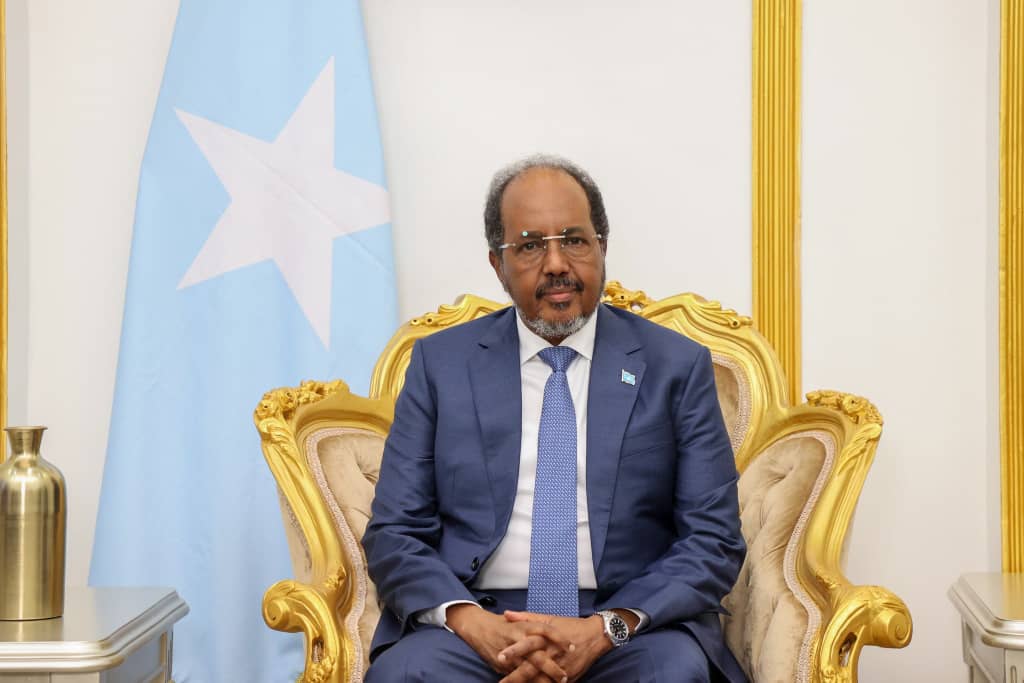
President Hassan Sheikh Mohamud: Twice Elected, Proven by Results
Somalia has a rare case in African politics: a president elected twice, years apart, during two different phases of state recovery.
His record speaks clearly:
- Al-Shabaab is on the run, no longer dictating the national agenda
- National debt reduced from $4.5 billion to about $700 million (under 6% of GDP)
- UN arms embargo fully lifted
- ICJ maritime victory against Kenya—Somalia now has an internationally recognized maritime border
- Illegal Hargeysa–Ethiopia memorandum nullified and defended
- EAC membership secured
- UN Security Council seat beginning January 2026
- North Eastern State (NES) was formed constitutionally
- Attempts to push Hargeysa–Israel recognition blocked and build a strong well led by the Saudis
- Banadir local elections were successfully held
- APRM membership achieved
- Elected to the AU Peace and Security Council (2026–2028)
- GDP and state revenues are rising
- Inflation is at its lowest level in decades
- International relations have been at their strongest since 1991
- Constitutional reform advanced—Chapters 1–9 addressed, referendum within reach
This is not a coincidence.
This is what happens when leadership is allowed to finish its work.
South West State: Abdi Aziz Lafta-Gareen and the Power of Staying the Course
South West State offers another clear lesson.
Under President Abdi Aziz Lafta-Gareen, the region moved away from political paralysis toward institutional order:
- Federal–state relations stabilized
- Security coordination improved
- Administrative continuity restored
- Al-Shabaab pressure is applied systematically, not randomly
Whether critics like him or not is irrelevant.
The fact is simple: South West is more stable today than it was before continuity took hold.
Stability did not come from frequent leadership change.
It came from time and consistency.
Galmudug: Ahmed Cabdi Kaariye (Qoor Qoor) and Measurable Progress
In Galmudug, President Ahmed Cabdi Kaariye has governed for nearly five years.
The results are visible:
- Improved security environment
- Functional regional administration
- Stronger federal cooperation
- Reduced political fragmentation
Galmudug today is not perfect—but it is clearly better governed than it was during periods of constant turnover.
Again, the pattern repeats.
The Pattern Is Clear
Across Somalia—federal and regional—the same rule applies:
When leadership is stable, institutions grow.
When leadership is constantly changed, institutions collapse.
You do not change commanders in the middle of a war.
You do not rewrite the Constitution by restarting the state every election cycle.
Somalia Does Not Need Experiments—It Needs Time
Somalia has already paid the price of chaos.
What it is experiencing now is something rare: compound progress.
Disrupting leadership at this stage would not be democratic renewal.
It would be strategic regression.
Let the war conclude.
Let reforms mature.
Let institutions solidify.
Continuity is not the enemy of democracy.
In Somalia’s case, it is the only path to survival.
