
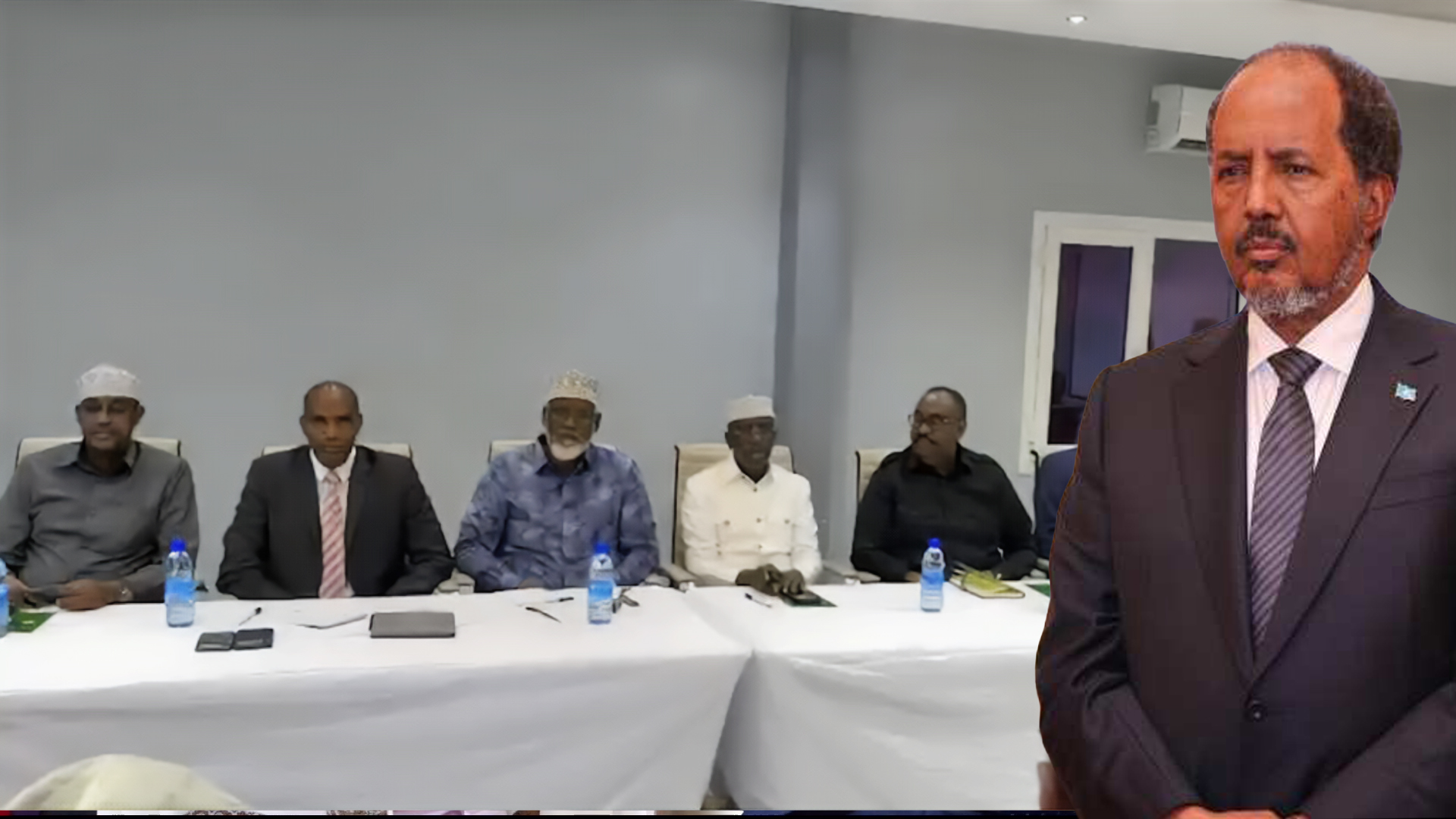
Mogadishu, Somalia
For more than two decades, Somalia has treated elections as a cure for instability. They have not been. Each cycle has produced renewed disputes, weakened institutions, and prolonged uncertainty. The reason is not mysterious:
The country has never resolved how power is actually divided within its federal system.
Until it does, elections will continue to disappoint.
Somalia’s political impasse is often framed as a failure of leadership or political will. In reality, it is a structural problem. The provisional constitution left core questions unanswered—questions that determine whether a state can function at all. Who controls national security assets? Who has authority over ports, airports, and airspace? How is revenue collected and shared? What happens when federal and regional authorities disagree?
These questions were deferred in the hope that elections would eventually impose clarity. Instead, ambiguity became permanent, and politics adapted to it.
A Federal System Left Incomplete
Somalia adopted federalism in the aftermath of state collapse, amid insecurity and international pressure. The intent was decentralization and inclusion. But federalism was implemented before its rules were finalized. Member states emerged before the balance of authority between the center and the regions was clearly defined.
The result is a system in which:
- Regional leaders act with near-sovereign discretion
- National assets become subjects of negotiation
- Security coordination is politicized
- Fiscal authority is fragmented
This is not a flaw of federalism itself. It is the cost of leaving federalism unfinished.
Elections held under such conditions do not resolve disputes; they institutionalize them.
Why Elections Alone Cannot Fix the Problem
Elections are designed to select leaders within an agreed framework. They are not designed to establish the framework itself.
In Somalia, each election produces winners who inherit contested authority and losers who question the legitimacy of the system. The disputes that follow are predictable: negotiations resume, timelines slip, and the next election becomes the focus before the last one has settled.
This cycle has persisted because unclear power benefits political actors. Ambiguity allows leverage. It delays accountability. It turns governance into negotiation.
But what serves politicians does not serve the state.
A Rare Political Moment
Today, Somalia finds itself at an unusual moment. Political leaders from across the spectrum—federal authorities, member state presidents, former leaders, and opposition figures—are present in Mogadishu. Security conditions, while still fragile, are markedly improved compared to a decade ago. State institutions exist and function, if imperfectly.
Such alignment is rare in Somalia’s recent history. It creates an opportunity that should not be squandered.
Rather than rushing toward another election calendar, Somali leaders should use this moment to finalize binding agreements on federal authority.
What Must Be Settled First
Before any election is held, at least four areas require a clear, enforceable resolution:
National Security:
The Federal Government must have undisputed authority over borders, airspace, ports, airports, and strategic military installations. No state can defend itself if its core security assets are subject to political bargaining.
Fiscal Authority:
Rules governing taxation, customs, and revenue sharing must be clarified and enforced. A state without fiscal coherence cannot govern effectively.
Political Hierarchy:
Federal member states should retain administrative autonomy, but federal authority must be final in matters of national sovereignty. Shared governance does not mean optional authority.
Enforcement Mechanisms:
Agreements must include consequences for violations. Without enforcement, political settlements become symbolic rather than binding.
These are not radical demands. They are the minimum requirements of statehood.
A Simple Principle
Power must be defined before it is elected.
This principle is foundational to every stable federation. Somalia’s continued instability is not evidence that elections are unimportant—it is evidence that elections alone are insufficient.
The Choice Ahead
Somalia’s leaders face a decision with generational consequences. They can prioritize institutional clarity and lay the groundwork for elections that carry real authority. Or they can proceed as before, holding elections that reproduce uncertainty and prolong negotiation.
The latter path is familiar. It is also exhausted.
If Somalia is to move beyond its long transitional era, it must first settle the rules of its federal system. Only then can elections fulfill their purpose—not as a substitute for governance, but as its expression.
