
The loudest voices in Somalia’s current constitutional debate insist the country is heading toward a political crisis. According to them, the federal government’s attempt to finalize amendments to the provisional constitution is a dangerous move—one that could concentrate power and threaten Somalia’s fragile political balance.
Those warnings are serious. Somalis have good reason to be cautious about power. Our history is full of moments when authority was abused, and institutions collapsed.
But something is missing from much of this debate: context.
Somalia today is not the Somalia of 2012.
And for people who grew up during the worst years of the country’s collapse, that difference is impossible to ignore.
I grew up in Mogadishu during the civil war years. At that time, politics felt like something distant and almost meaningless. Leaders held conferences and negotiations, but the neighborhoods where ordinary people lived remained trapped in insecurity.
There were checkpoints everywhere. Explosions were common. Entire districts emptied before sunset. The idea that the state might protect its citizens felt almost unrealistic.
Politicians argued constantly about forming governments. But in the streets where people actually lived, nobody waited for those arguments to end. People simply tried to survive.
In many ways, Somali politicians negotiated power among themselves while ordinary citizens lived with the consequences.
That memory matters today, because something important has changed in Mogadishu.
For the first time since the collapse of the Somali state in 1991, the capital and its surrounding areas are experiencing a level of security that many residents had never known in their lifetime. The shift did not happen overnight, and it is still fragile. But anyone who has lived through Mogadishu’s darkest years can see the difference.
Streets that once emptied after sunset now stay busy late into the evening. New businesses open regularly. Restaurants are full. Construction projects appear across the city.
Perhaps most importantly, young people—millions of them—are beginning to find opportunities that simply did not exist before.
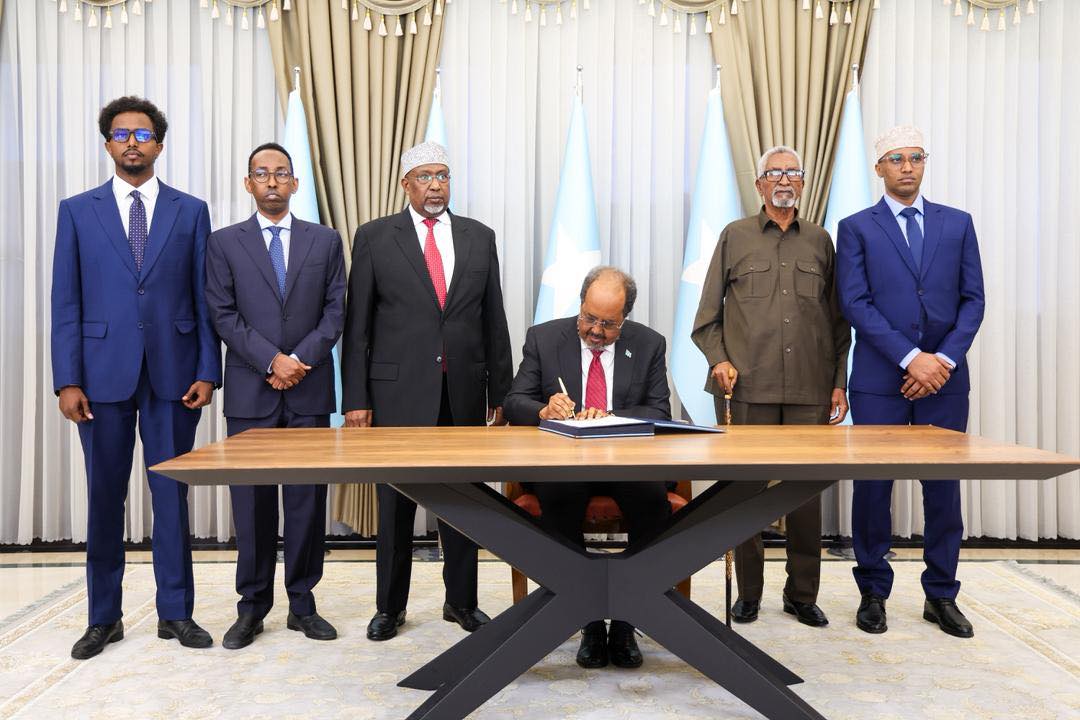
Much of this change has taken place during the presidency of Hassan Sheikh Mohamud. His administration has focused heavily on restoring security in the capital and rebuilding the basic institutions of the Somali state.

For residents of Mogadishu, that shift is not theoretical. It is visible in daily life.
Security improvements are only part of the story. The government has also pushed forward with something Somali leaders have delayed for more than three decades: completing the country’s constitution.
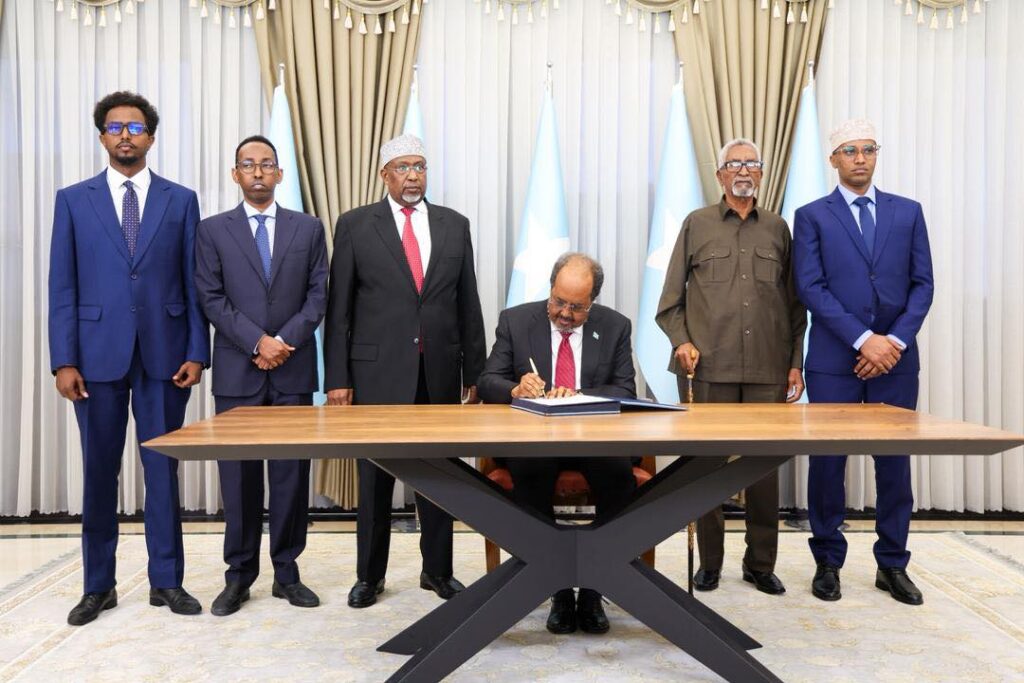
The provisional constitution adopted in 2012 was never meant to be permanent. It was a temporary framework created after the collapse of the state to help rebuild governance. Finishing that document is not a radical move—it is something Somalia has been expected to do for years.
A completed constitution also matters for another reason: investment.
No country can attract serious international investment without clear legal foundations. Somalia’s leadership understands this. That is one reason the government has tried to finalize the constitutional framework.
Meanwhile, interest in Somalia’s natural resources is growing.
Turkish and European companies have begun exploring areas near Afgooye in the Lower Shabelle region as well as parts of Middle Shabelle. There are also discussions about exploration projects in sections of Mudug. Offshore, preparations continue for vessels that may eventually begin extracting Somalia’s long-suspected petroleum reserves.
None of this guarantees success. Resource development is a long process, and Somalia still faces major challenges.
But the fact that international companies are even considering such investments signals something important: the perception of Somalia is slowly changing.
Yet paradoxically, progress sometimes creates its own political tension.
Some opposition figures describe the constitutional amendments as a threat. Others warn that the country is sliding toward authoritarianism. A number of commentators even claim Somalia is heading into a political abyss.
For many ordinary citizens, however, those warnings sound strangely disconnected from reality.
People who lived through the worst years of insecurity know what collapse looks like. They have experienced the fear, the uncertainty, the absence of authority. They recognize when things begin to improve.
Many Somalis have spent decades living with the trauma of instability. Now that the situation is slowly changing, it is not surprising that many citizens want progress to continue rather than return to endless political paralysis.
The constitutional debate therefore reflects more than legal disagreement. It reveals two different ways of looking at Somalia’s future.
One side sees risk in strengthening federal institutions. The other sees necessity.
There is also a misunderstanding that occasionally appears in regional discussions.
Some people in Puntland and other parts of the country worry that a stronger Mogadishu might somehow threaten regional autonomy. That fear is understandable, but it misses an important reality.
Mogadishu is not just another city. It is the economic center of Somalia.
When Mogadishu becomes stable, the entire country benefits. Trade expands. Investment increases. Opportunities spread far beyond the capital itself.
In that sense, a peaceful Mogadishu is not a victory for one region over another. It is a foundation for national recovery.
Somalia’s constitution will not solve every political dispute. No document ever does.
But after more than thirty years of temporary arrangements and incomplete institutions, finishing the foundations of the Somali state is a step the country cannot postpone forever.
Those of us who grew up during the Civil War understand this better than most.
We know what the absence of government looks like. We know the cost of endless political negotiation without progress.
And we know that imperfect institutions are still far better than no institutions at all.
Somalia today is still fragile. But it is also changing.
And that reality should shape the debate about its future.
