
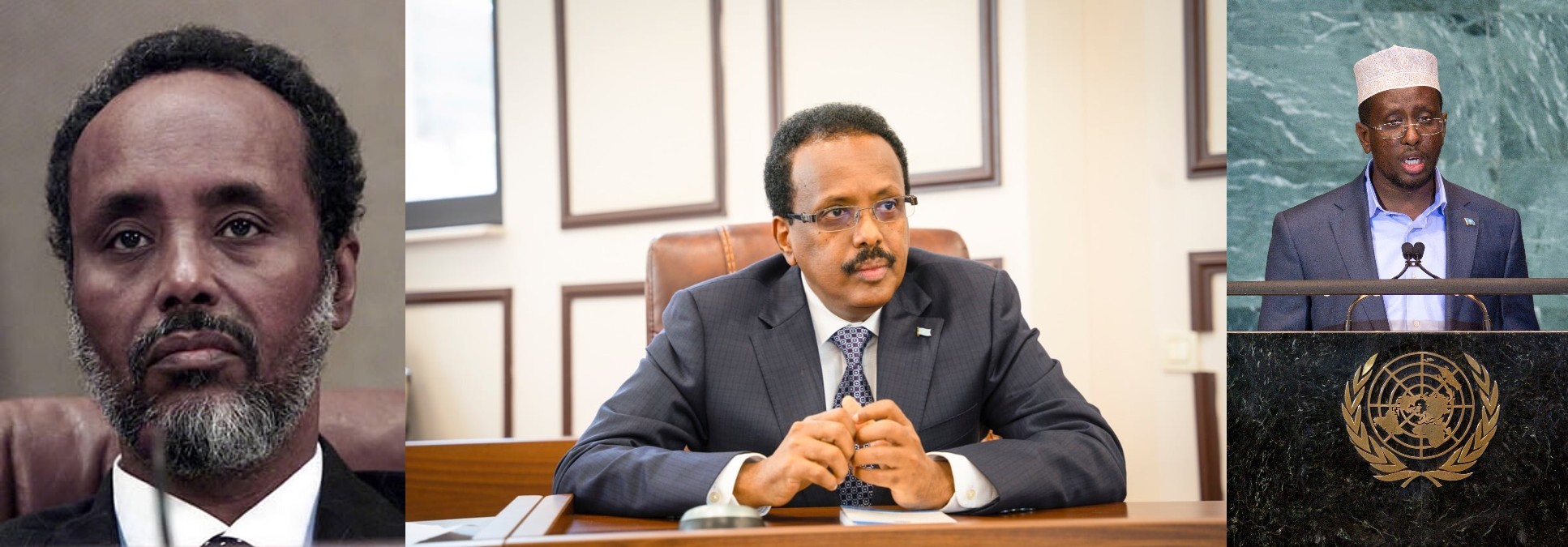
The recent letters from former presidents Cabdiqaasim Salaad Xasan, Sheikh Sharif Sheikh Axmed, and Mohamed Cabdullahi Farmaajo raise concerns about the government’s land clearance program in Mogadishu. Their voices carry weight, given their years of service. But on this issue, they are missing the bigger picture.
The Importance of Land Clearance in Mogadishu
For decades, parts of Mogadishu were left in limbo. They were overcrowded, unregulated, and in some cases outright dangerous. Militants and criminals took advantage of this vacuum, using these areas as hideouts and weapons depots. Ordinary citizens avoided them because they had no proper roads, no security, and no real connection to the city’s economy. It is within this context that the government’s decision to clear and restructure the land must be understood.
The results are already visible. More than 200,000 people—many of them returnees or once-displaced families — now hold legal documentation proving their right to land and property. For the first time, they can walk into a bank, take out a loan, and open a business with confidence that their assets are recognized by law. This is not just about land titles; it is about dignity and a pathway into the middle class.
There is also a national interest at stake. Land that once generated nothing for the state is now taxable, meaning more revenue for infrastructure, schools, and public services. In a city where informal settlements previously meant no taxes and no services, this shift is profound. Mogadishu gains not only a safer urban landscape but also an economic foundation that strengthens state authority.
None of this is to dismiss the concerns about disruption or hardship. Urban renewal is never painless, and governments must balance security and development with compassion for the people most affected. But to portray this policy as reckless or harmful, as the three former presidents have done, is misleading. The clearance has improved security, opened the city to democratic processes, and empowered citizens who were once invisible in the system.
In the long view, the question is simple: do we want Mogadishu to remain a patchwork of unsafe, unplanned zones, or do we want it to grow into a functioning capital city — secure, lawful, and ready to host democratic elections? The government’s decision points toward the latter. On that measure, the critics are on the wrong side of progress.
