
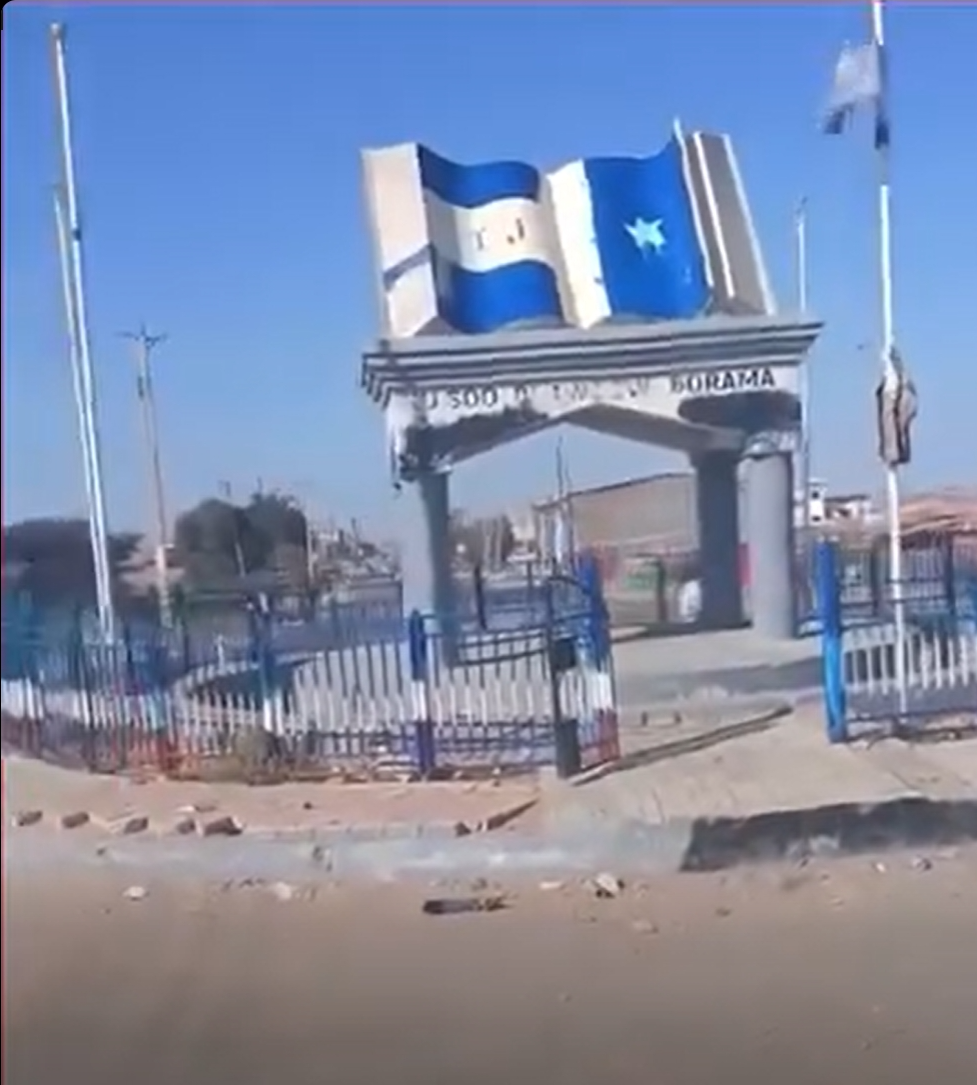
The city of Boorama—long regarded as a cultural and educational hub for Somalis—has entered a critical political moment after widespread unrest forced Somaliland’s local administration to effectively lose control of the city.
The clashes began unexpectedly but quickly escalated, spreading across the entire city. Security forces from Somaliland confronted residents, triggering intense street confrontations and a wave of civilian resistance. Videos circulating on social media showed residents removing Somaliland symbols—flags, signboards, and other emblems linked to the Hargeisa-based administration.
Local sources report that at least 27 people have been confirmed dead, while more than 160 others were injured. Many of the wounded were initially transported to Jigjiga for emergency care before being transferred to the Turkish-run Mogadishu Erdogan Hospital, which serves complex cases.
As tensions rose, Boorama’s youth and broader community issued a public demand for Somaliland police and military forces to withdraw from the city, warning that demonstrations would intensify if their call were ignored. Meanwhile, the Somali national flag and the emerging Awdal State flag have become increasingly visible throughout the city.
Traditional elders and religious leaders have launched mediation efforts, though no final agreement has been reached regarding whether Somaliland’s administration will return. Elders express cautious optimism, but the mood on the ground is clear: many residents insist that the Somali national flag will not be removed, even if Somaliland regains administrative presence.
This moment echoes the 2006 civilian uprising in Mogadishu, when public pressure pushed out the dominant warlords—an event that reshaped Somalia’s political landscape, for better and worse.
Today, Boorama stands at a crossroads. Whether this becomes a peaceful reconfiguration of authority or the opening of a new, unpredictable chapter will depend on the coming days.
