
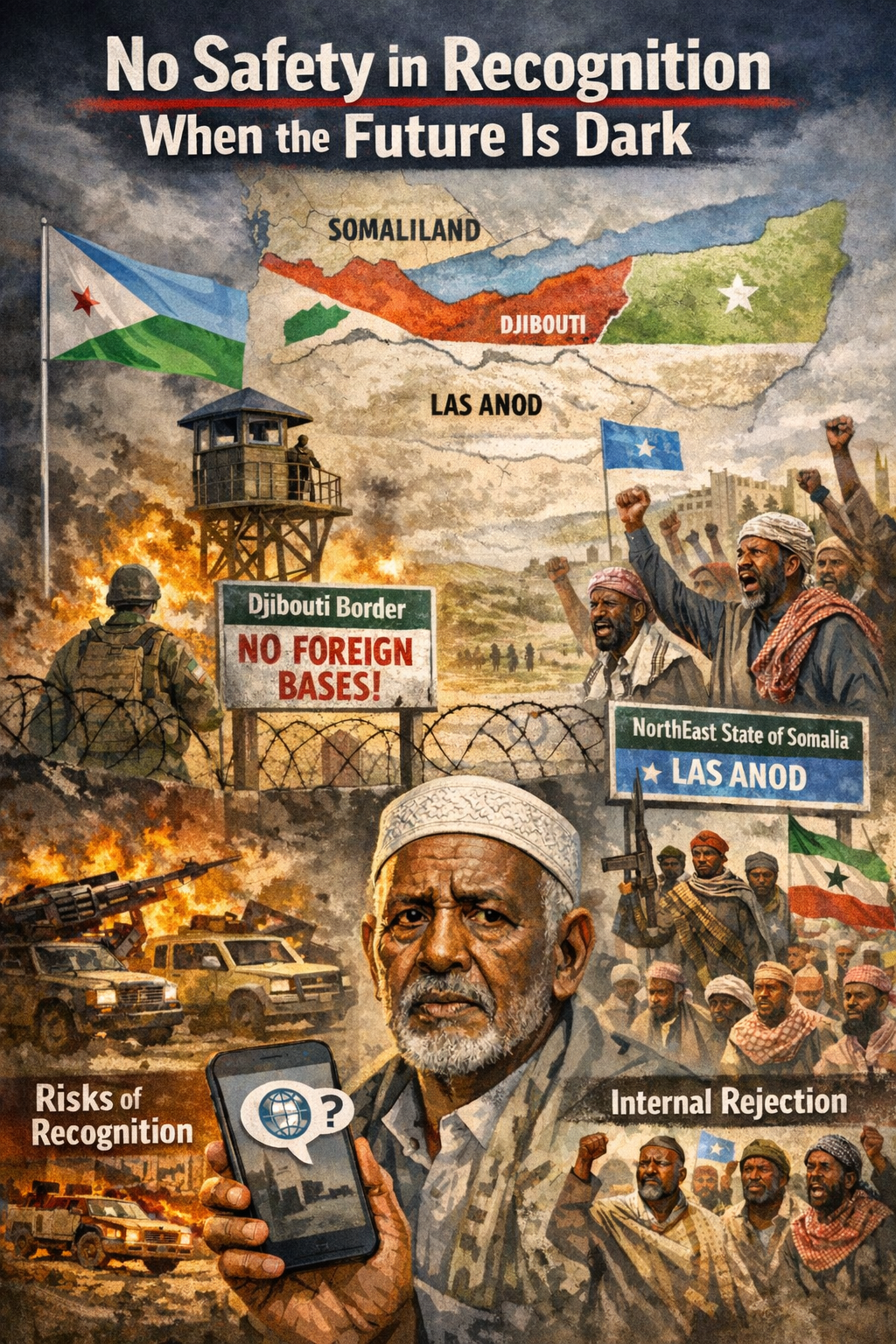
Recognition is not a prize to decorate political speeches. It is a heavy political act, one that reshapes security, alliances, and the fate of ordinary people. Today, in Somaliland, the foundations for safely pursuing Recognition do not exist.
The Somaliland administration has entered a dangerous phase, where Recognition risks turning its territory into a battleground for foreign interests. Somaliland’s ties with Israel and the possibility of a security or military footprint have alarmed not only local populations but neighboring states as well, particularly Djibouti. This concern is not paranoia; it is a sober security assessment.
Djibouti understands this: when foreign powers establish on Somaliland soil , instability follows. Recognition tied to external military or strategic interests does not bring protection; it invites confrontation. This reality explains why Djibouti has launched political and social efforts to counter the current trajectory Somaliland is pursuing.
Inside Somaliland itself, the message coming from the people are clearer. Clans that once formed the backbone of stability are now openly questioning the cost of Recognition. Communities along the Djibouti border have drawn firm red lines: their land will not become a battlefield or a staging ground for Middle Eastern conflicts. Even those who support secession are rejecting Recognition if it comes at the expense of their security, livelihoods, and regional trade.
The clearest resistance is emerging in eastern Somaliland. There, clan solidarity, religious identity, and shared survival outweigh any recognition granted from abroad. The rise of the NorthEast State of Somalia, the region that Somaliland claims but became a member of the Somali federal states, and the capital city in Las Anod, is a blunt reminder that recognition imposed from outside collapses when the people on the ground do not consent to it.So the real question is this: what does Recognition mean if the people reject its consequences?
Ali Haybe, who lives in Burco, said this: “Recognition does not come from a WhatsApp phone in foreign capitals. It derives legitimacy from internal consensus, regional stability, and respect for neighboring realities. When Recognition threatens to fracture society, disrupt trade, and import foreign wars, it stops being an achievement—and becomes a liability”.
If this path continues unchecked, Recognition will not unite Somaliland. It will expose it.
