Following the decision by the government of Benjamin Netanyahu to recognize extremist factions operating out of Hargeisa, a series of significant political, social, and economic shifts have unfolded across northern Somalia.
Public opposition has intensified sharply across multiple regions. Community leaders, civil society members, and residents have rejected any association with the extremist factions, which are increasingly described locally as supporters of the ongoing violence in Gaza. Residents have stated unequivocally that their collective identity must not be used to legitimize such groups. Many emphasized that claims suggesting “Somaliland was recognized” are misleading; instead, they argue that the recognition applied narrowly to an extremist faction whose ideology lacks public consent and long-term viability in the region. Local voices have further stressed that such groups will not be allowed to undermine social stability or impose their agenda on peaceful communities.
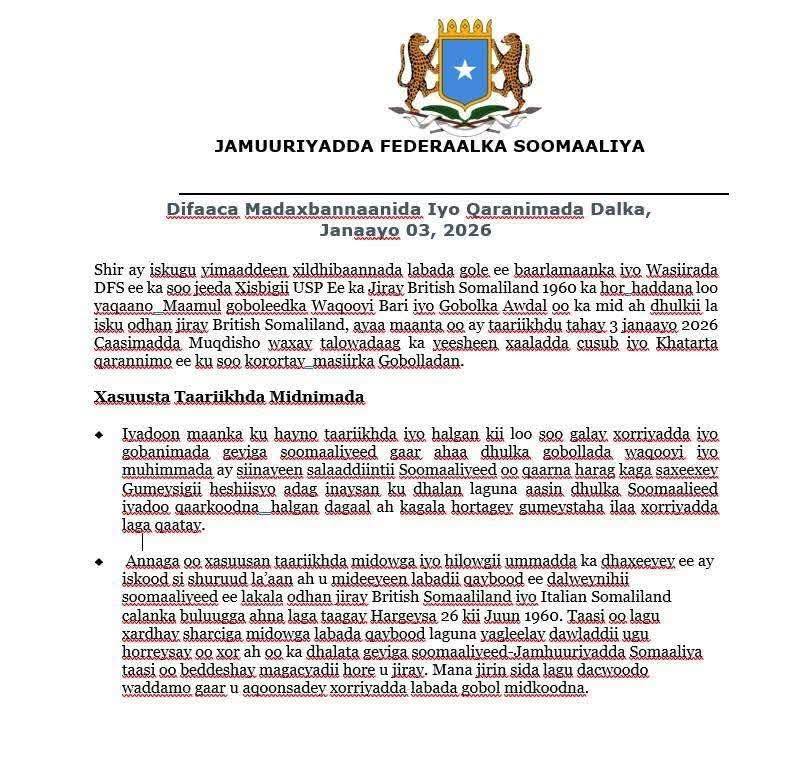
In the Awdal region for example, the largest in the area, extending from the Bab el-Mandeb corridor to the Djibouti border—opposition has been particularly pronounced. Regional leaders and residents have openly rejected alignment with the extremist factions. In a symbolic move, Somaliland flags were removed from homes and commercial centers, with residents stating that political control had been asserted without their approval. Community representatives reiterated that these developments do not reflect the will of the population.

At the economic level, resistance has expanded through key trade networks. Livestock exporters operating via Berbera Port—one of the most critical commercial hubs in Somali territories—have initiated a boycott, refusing to engage in business with entities linked to the extremist factions. Traders cited moral, reputational, and economic concerns, noting the broad international condemnation surrounding the Gaza conflict. This commercial disengagement has added further pressure, restricting financial and logistical channels available to the groups.

Taken together, these developments point to a coordinated and widening pushback across social, political, and economic fronts. Analysts and local observers note that the extremist factions are facing increasing isolation, diminished legitimacy, and shrinking operational space—marking a decisive shift in the balance of influence in northern Somalia.